Geldschöpfung und Ungleichheit – wer hat, dem wird gegeben
Anknüpfend an die Jahrestagung 2017 von Monetative e.V. zum Thema “Geld. Macht. Ungleich.” soll in diesem Beitrag ein Überblick über die verschiedenen direkten und indirekten Kanäle gegeben werden, durch die das derzeitige Geldsystem die Ungleichheit verschärft und wie eine Vollgeldreform die Situation verbessern könnte.
Wie das aktuelle Geldsystem die Ungleichheit verstärkt
1) Boom/Bust-Kreditzyklen
Das derzeitige Geldsystem ermöglicht es den Banken, durch umfangreiche Kreditschöpfung Vermögensblasen und Booms anzuheizen. Dies ermöglicht im Zuge der Boomphase enorme Gewinne für die Banken selbst, für die Finanzmärkte und für die Besitzenden im Allgemeinen. Dieser Effekt kann durch kreative Buchführung (z.B. durch die Verwendung von Zweckgesellschaften, Derivaten und diversen anderen Möglichkeiten zur Aufblähung der Bilanz) verstärkt werden, um überhöhte Bilanzgewinne vorzutäuschen oder Verluste zu verbergen. Wenn die Regeln fair wären, sollte das finale Platzen einer Finanzblase dazu führen, dass die in der Boom-Phase entstandenen illusionären Erträge wieder verschwinden. Aber im derzeitigen Geldsystem sind Banken systemrelevant und zu groß, um einfach pleite zu gehen, da sie allein Geld/Kredit und die Zahlungsinfrastruktur für die Realwirtschaft bereitstellen. Wenn Banken nicht gerettet werden...
Dieser Beitrag ist zuerst auf dem Monetative Blog erschienen und in englischer Fassung auf dem Blog des International Movement for Monetary Reform als "Money creation and inequality – an underexposed topic for monetary reformers".
Anknüpfend an die Jahrestagung 2017 von Monetative e.V. zum Thema “Geld. Macht. Ungleich.” soll in diesem Beitrag ein Überblick über die verschiedenen direkten und indirekten Kanäle gegeben werden, durch die das derzeitige Geldsystem die Ungleichheit verschärft und wie eine Vollgeldreform die Situation verbessern könnte.
Wie das aktuelle Geldsystem die Ungleichheit verstärkt
1) Boom/Bust-Kreditzyklen
Das derzeitige Geldsystem ermöglicht es den Banken, durch umfangreiche Kreditschöpfung Vermögensblasen und Booms anzuheizen. Dies ermöglicht im Zuge der Boomphase enorme Gewinne für die Banken selbst, für die Finanzmärkte und für die Besitzenden im Allgemeinen. Dieser Effekt kann durch kreative Buchführung (z.B. durch die Verwendung von Zweckgesellschaften, Derivaten und diversen anderen Möglichkeiten zur Aufblähung der Bilanz) verstärkt werden, um überhöhte Bilanzgewinne vorzutäuschen oder Verluste zu verbergen. Wenn die Regeln fair wären, sollte das finale Platzen einer Finanzblase dazu führen, dass die in der Boom-Phase entstandenen illusionären Erträge wieder verschwinden. Aber im derzeitigen Geldsystem sind Banken systemrelevant und zu groß, um einfach pleite zu gehen, da sie allein Geld/Kredit und die Zahlungsinfrastruktur für die Realwirtschaft bereitstellen. Wenn Banken nicht gerettet werden würden, würde die Zahlungsinfrastruktur zusammenbrechen und damit der Wirtschaftskreislauf einfrieren. Außerdem könnte eine Pleite einer größeren Bank das inhärente Risiko eines Bankruns manifestieren und zu allgemeiner Panik und einem Totalausfall des Systems führen. In logischer Folge werden Banken (und in der Folge die Anteilseigner der Banken) in der Regel vom Staat gerettet und von den Zentralbanken unterstützt “Ehatever it takes” (z.B. durch Übernahme fauler Kredite, die Bereitstellung von Notfallliquidität usw.). Die Versuche der Zentralbank, die Verbraucherpreisinflation durch Zinssenkungen zu steigern, machen das Ganze nur noch schlimmer. Von der Idee her sollen Zinssenkungen die Banken dazu anzuregen, mehr Kredite zu vergeben und damit die Wirtschaft anzukurbeln. Das Niedrigzinsumfeld befeuert aber primär Vermögens- statt Verbraucherpreisinflation, was für die "Besitzenden" noch mehr Vermögenszuwächse bedeutet und die Vermögenskonzentration weiter verstärkt. Im Ergebnis führt das Zusammenbrechen des Kartenhauses also nicht dazu, dass die illusionären Gewinne implodieren, sondern dass die Verluste auf die Regierung abgewälzt werden. Die Aufwendungen für Bankenrettungen wiederum erhöhen die Staatsverschuldung und steigern damit zukünftige Schuldenzinsen, was in der Regel Budgetkürzungen für die öffentliche Infrastruktur und für öffentliche Dienstleistungen bedeutet. Ein Nebeneffekt des Asset-Booms im Immobilienmarkt sind außerdem steigende Mietkosten für alle diejenigen, die es sich nicht leisten können, ihr eigenes Haus zu besitzen.
Kurz gesagt: Die Reichen auf Kosten des Rests der Gesellschaft noch reicher.
2) Wettbewerbsvorteile für Großkonzerne
Neben der oben dargestellten Boom/Bust bzw. Profit/Bailout-Dynamik schafft das aktuelle Geldsystem auch einen generellen Wettbewerbsvorteil für Großkonzerne im Vergleich zu kleineren Unternehmen und fördert daher eine generelle Konzentration von Marktmacht und Geldvermögen. Dies liegt erstens daran, dass die enormen impliziten und expliziten too-big-to-fail Subventionen eine Großbanken-Infrastruktur begünstigen, in der großvolumige Kredite an Großunternehmen gegenüber verwaltungsintensiveren kleinvolumigen Krediten für kleinere Unternehmen bevorzugt werden. Mit anderen Worten: In diesem Umfeld scheint es wahrscheinlicher, dass Bayer einen Mega-Kredit erhält, um Monsanto zu übernehmen, als dass ein kleines Start-up das Geld bekommt, um einen vielversprechenden Geschäftsplan umzusetzen. Das derzeit bestehende Niedrigzinsumfeld und die verfolgte Mikroregulierung des Finanzmarkts verstärken diese Dynamik und setzen vor allem kleinere Banken (die oft das eigentliche Rückgrat der Realwirtschaft bilden) unter Druck, zu fusionieren. Zweitens haben nur Großkonzerne die Möglichkeit, eigene Unternehmensbanken zu betreiben, die ihnen einen enormen Finanzierungs- und Liquiditätsvorteil im Vergleich zu kleineren Unternehmen verschaffen, welche auf externe Finanzierung angewiesen sind. Drittens hat die EZB in den letzten Jahren im Rahmen ihres "Quantitative Easing"-Programms sogar begonnen, Anleihen großer multinationaler Konzerne wie Shell, BMW oder Repsol zu kaufen, was deren Finanzierungskosten senkt und diesen einen weiteren unfairen Wettbewerbsvorteil verschafft. Viertens schafft das derzeitige Niedrigzins-Umfeld zusammen mit den obigen Faktoren das perfekte Umfeld für große Übernahmen und Fusionen, was zu noch mehr Marktkonzentration führt.
Insgesamt unterstützt das Geldsystem somit extraktive Oligopolstrukturen und die Konzentration von Marktmacht und Vermögen in den Händen von wenigen großen Konzernen auf Kosten der Allgemeinheit.
3) Wer hat, dem wird gegeben
Zusätzlich begünstigt das aktuelle Geldsystem in der Regel die Wohlhabenden, den "wer hat, dem wird (Kredit) gegeben". Diejenigen, die aufgrund ihres bestehenden Vermögensbesitzes kreditwürdig sind, bekommen günstiger Kredite und schwimmen oft in Liquidität, was noch profitablere Investitionen ermöglicht, während es für „Nicht-Besitzende“ viel schwieriger und kostspieliger ist, einen Kredit zu erhalten. In diesem Zusammenhang sollte der sogenannte "Cantillon-Effekt" erwähnt werden, der beschreibt, wie eine Erhöhung der Geldmenge jenen Teilen der Wirtschaft zu Gute kommt, in denen neues Geld entsteht (also Finanzmärkte, große Fonds und reiche Investoren), auf Kosten aller anderen Wirtschaftssektoren, deren realer Geldvermögenswert aufgrund der resultierenden Inflation sinkt.
4) Wachstumszwang und Sockelarbeitslosigkeit
Schließlich führt die Schaffung von Geld als Kredit zu einer systemischen Knappheit des Geldumlaufs, zu einem Wachstumszwang und in der Regel zu struktureller Arbeitslosigkeit. Denn wenn die Geldmenge nicht ständig wächst, gibt es systemisch nie genug Geld, um die Kredite PLUS Zinsen zurückzuzahlen, vor allem dann, wenn ein Teil der Geldvermögen gehortet und damit der realwirtschaftlichen Geldzirkulation entzogen wird. Das führt dazu, dass entweder die Geldmenge und der entsprechende Schuldenstand kontinuierlich wachsen müssen oder es zu Pleiten, Wirtschaftsdepression und Arbeitslosigkeit kommen muss. Mit anderen Worten: Die systembedingte Knappheit des Geldumlaufs in der Realwirtschaft führt typischerweise zu struktureller Arbeitslosigkeit. Der Wettbewerb um knappe Arbeitsplätze wiederum führt dazu, dass sich die Beschäftigten in einer chronisch schlechten Verhandlungsposition befinden, gekennzeichnet durch relativ niedrige Löhne und schwache Gewerkschaften.
Zusammenfassend lässt sich somit sagen, dass die Kreditgeldschöpfung der Banken systemisch eine Vielzahl direkter und indirekter Auswirkungen hat, durch welche die Verteilung von Macht, Vermögen und Einkommen in den Händen der Wenigen konzentriert werden.
Faire Rahmenbedingungen und mehr Verteilungsgerechtigkeit durch Vollgeld
Im Vergleich dazu schafft ein Vollgeldsystem sehr viel fairere wirtschaftliche Rahmenbedingungen, die sehr viel besser mit den Idealen einer freien Marktwirtschaft und den demokratischen Grundprinzipien vereinbar sind.
1) Volle (Übergangs-)Seigniorage für die öffentliche Hand
Erstens würde beim Übergang zu einem Vollgeldsystem eine beträchtliche Übergangsseigniorage anfallen, indem Kreditgeld durch schuldfreies Vollgeld ersetzt wird. Diese Übergangsseigniorage würde eine enorme Reduzierung der Staatsschulden ermöglichen. Eine geringere Staatsverschuldung bedeutet geringere öffentliche Zinsausgaben, was wiederum niedrigere Steuern oder bessere öffentliche Dienstleistungen und Infrastruktur ermöglichen würde, die der gesamten Gesellschaft zu Gute kommen. Außerdem würde jede Ausweitung der Geldmenge als Seigniorage-Einkommen der öffentlichen Hand zufließen und damit ein zusätzliches regelmäßiges Einkommen generieren. Die Höhe dieser regelmäßigen Seigniorage hinge vom Wachstum der Wirtschaft und dem Inflationsziel ab. Obwohl volle Preisstabilität mit Null-Inflation in einem Vollgeldsystem realisierbar wäre, wäre es auch denkbar, ein moderates Inflationsziel (2-3%) anzupeilen, da dies mehr Geldschöpfung ermöglichen würde, wodurch wiederum mehr Seigniorageeinkommen für den Staat anfallen würde. Dies würde eine Umlaufsicherung a la Silvio Gesell implizieren, da Geldhortung durch die schleichende Entwertung bestraft werden würde. Auf diese Weise würde der Cantillon-Effekt eine stetige Umverteilung von den Geldvermögenden zum Rest der Gesellschaft bewirken, anstatt umgekehrt, wie es jetzt der Fall ist.
2) Verhinderung der Boom/Bust-Dynamik und der Bankenrettungen
Zweitens könnte das Bankensystem als Ganzes nicht mehr illusionäre Booms erzeugen, indem Vermögenspreisblasen mit neu geschöpftem Kreditgeld angeheizt werden. Und da die Regierung bzw. Zentralbank Boom/Bust Zyklen sehr viel direkter entgegenwirken könnte, scheint die derzeitige hochprofitable Boom/Bust-Dynamik für Banken nicht mehr in der Form möglich. Im Allgemeinen erscheint es sehr viel unwahrscheinlicher, dass sich die Politik dafür entscheiden sollte, Banken zu retten, da die Zahlungsinfrastruktur vor Bankpleiten sicher wäre, das Dilemma der Bankruns gelöst wäre und die Geldversorgung unabhängig von der Kreditvergabe der Banken gesichert wäre. Dies bedeutet, dass, selbst wenn ein Boom entsteht, beim Knall diejenigen die Rechnung bezahlen, die dabei mitgespielt und anfangs davon profitiert haben (So wie es jetzt auch bei der Bitcoin Blase zu erwarten ist). Banken und Vermögende müssten nicht mehr gerettet werden, um eine wirtschaftliche Depression abzuwenden, denn die Wirtschaft könnte sehr viel direkter durch zusätzliche Staatsausgaben oder Helikoptergeld angekurbelt werden, was allen zu Gute käme und nicht nur den Vermögenden.
3) Faire Rahmenbedingungen für die Wirtschaft
Drittens schafft ein Vollgeldsystem allgemein sehr viel fairere wirtschaftliche Rahmenbedingungen: Da Großbanken im Vollgeldsystem bedeutend an Systemrelevanz verlieren, verlieren sie die riesigen impliziten too-big-to-fail Subventionen. Weiterhin kann dank der Zusammenführung von Risikoübernahme und Gewinnpotential im kohärenten und stabilen Rahmen der Vollgeldordnung die gegenwärtige Mikroregulierung im Bankensektor zurückgefahren werden. Dies ermöglicht, dass kleinere Banken, die der Realwirtschaft dienen, es wieder einfacher haben, mit ihren größeren Brüdern zu konkurrieren. Auch der Wettbewerbsvorteil von Unternehmensbanken würde sich aufheben. Außerdem wäre es generell schwieriger, gigantische Kreditsummen aufzubringen, da diese nicht mehr einfach aus dem Nichts geschaffen werden könnten, sondern vorher durch Ersparnisse vollständig finanziert werden müssten. Dies beseitigt den Finanzierungsvorteil für große Unternehmen und erschwert Übernahmen und Fusionen, was ein faireres Umfeld für kleinere Unternehmen schafft.
4) Vollbeschäftigung ohne Wachstumszwang
Schließlich könnten Unterauslastung der Wirtschaft und Unterbeschäftigung durch zusätzliche seigniorage-finanzierte Staatsausgaben in die Realwirtschaft (statt in die Finanzsphäre wie bisher) sehr viel direkter angegangen werden, sodass der Wachstumszwang abgemildert und Vollbeschäftigung erreichbarer wäre. Dies sollte die Verhandlungsmacht der Arbeitnehmer insgesamt verbessern und den Lohnanteil im Verhältnis zum Finanzeinkommen erhöhen.
Eine Vollgeldreform sollte daher insgesamt zu einer geringeren Konzentration von Marktmacht, Vermögen und Einkommen führen und die Einkommensverteilung erheblich verbessern.
Abschließende Bemerkungen
Wenngleich die Bedeutung des Geldsystems für die steigende Ungleichheit in der öffentlichen Debatte bisher kaum bekannt ist, kann bei einer expliziten Beschäftigung mit der Thematik kaum in Frage gestellt werden, dass die Geldordnung einen großen Einfluss auf die Verteilung von Macht und Reichtum ausübt. So bewirkt das gegenwärtige Geldsystem mit der Kreditgeldschöpfung der Geschäftsbanken über die skizzierten direkten und indirekten Mechanismen eine erhebliche Verstärkung der Ungleichheit. Eine Vollgeldreform hingegen könnte viele dieser Effekte aufheben und sehr viel fairere wirtschaftliche Rahmenbedingungen schaffen. Natürlich ist Vollgeld kein Allheilmittel für die zahlreichen Probleme unseres Wirtschaftssystems ist, allerdings sind viele Probleme damit leichter zu lösen. Vollgeld ist deshalb oft keine hinreichende, wohl aber eine notwendige Maßnahme.
Auch wenn einige der aufgezeigten Mechanismen auf den ersten Blick nicht mit der Giralgeldschöpfung der Banken verbunden zu sein scheinen, sind diese Teil der Logik des gegenwärtigen Geldsystems und würden in einem Vollgeldsystem wohl nicht oder nur zu einem erheblich geringeren Grad wirken. In diesem kurzen Beitrag kann natürlich nur eine sehr oberflächliche Skizze der verschiedenen Mechanismen gegeben werden. Jeder einzelne Mechanismus würde eine eigene Forschungsarbeit verdienen. Wenn jedoch eine erste Vorstellung von der Bedeutung des Geldsystems für die Verteilung von Macht, Einkommen und Vermögen vermittelt werden konnte und dies zu weiterer Forschung anregt, hat der Beitrag sein Ziel erreicht.
Darüber hinaus gibt es zahlreiche andere Faktoren, welche die weltweit zunehmende Ungleichheit bewirken und viele andere Reformideen, die mehr Gleichheit bringen könnten. Aber es erscheint politisch sehr viel schwieriger, in einem System mit unfairen Rahmenbedingungen nachträglich durch entsprechende Steuern etc. umzuverteilen und den Vermögenden ihr Geld wieder abzunehmen, als von einem (Vollgeld-)System aus zu starten, in dem von Anfang an sehr viel fairere Chancen bestehen.
Weitere Lektüre:
“Banking, Finance and Income Inequality” by Graham Hodgson/Positive Money, 2013.
“Making money from making money – Seigniorage in the modern economy”, New Economics Foundation, 2017.
“Profit opportunities for the banking system due to deposit money creation and potentials of a sovereign money reform”, Masterarbeit von Lino Zeddies, 2015.

Die Vision einer neuen Ära sinnstiftender Organisationen
Stell dir vor, Unternehmen wären Orte der Selbstverwirklichung, der Selbstbestimmung und der Erfüllung gesellschaftlicher Verantwortung.
Stell dir vor, Schulen wären Orte der Begeisterung, Weisheit und Neugier.
Stell dir vor, öffentliche Behörden wären Orte der menschlichen Wärme, der Verantwortung und der Effektivität.
“Can we create soulful workplaces - schools, hospitals, businesses, and nonprofits - where our talents can blossom and our callings can be honored?” — Frederic Laloux

Stell dir vor, Unternehmen wären Orte der Selbstverwirklichung, der Selbstbestimmung und der Erfüllung gesellschaftlicher Verantwortung.
Stell dir vor, Schulen wären Orte der Begeisterung, Weisheit und Neugier.
Stell dir vor, öffentliche Behörden wären Orte der menschlichen Wärme, der Verantwortung und der Effektivität.
„Can we create soulful workplaces - schools, hospitals, businesses, and nonprofits - where our talents can blossom and our callings can be honored?“
Was ist nur los mit den heutigen Organisationen, dass die obigen Attribute nicht so richtig zu ihnen passen wollen?
Stattdessen haben internationale Konzerne Bürokratien und Hierarchien, deren Ausmaße fast schon vergleichbar sind mit den Strukturen sowjetischer Planwirtschaft. Ein Bekannter hat mir kürzlich anvertraut, dass eine interne Studie seines Arbeitgebers, eines großen deutschen Konzerns, ergeben habe, dass stolze 70% der Arbeitsprozesse unproduktiv seien (wie auch immer das gemessen wurde...).
Derweil sind in den USA gemäß einer Gallup Umfrage ganze 66% aller Arbeitnehmer unzufrieden mit ihrer Arbeit. Das Ergebnis sind weit verbreitete Depressionen und Burnouts und daher graut es vielen jungen Absolventen bei der Vorstellung, sich in ein traditionelles Arbeitnehmerverhältnis zu begeben.
„We now live in a nation where doctors destroy health, lawyers destroy justice, universities destroy knowledge, governments destroy freedom, the press destroys information, religion destroys morals, and our banks destroy the economy.“

"Ein Hamsterrad sieht von innen aus wie eine Karriereleiter."
Wie großartig und befreiend wäre es hingegen, wenn unsere Unternehmen, Schulen und Behörden so wären wie oben beschrieben. Gewaltiges gesellschaftliches Potenzial könnte sich unter solchen Bedingungen entfalten und zur Bewältigung der Herausforderungen unserer Zeit beitragen!
Doch wie nur können wir unsere Organisationen so umbauen, dass dieses Potenzial endlich freigesetzt wird?
Seit einiger Zeit beschäftigt mich diese Thematik und in diesem Artikel möchte ich meine Vision in Worte fassen und umschreiben, wie eine neue Ära sinnstiftender Organisationen aussehen kann.
„You never change things by fighting the existing reality. To change something, build a new model that makes the existing model obsolete.“
Mein eigener Bezug zum Thema
In den letzten zwei Jahren habe ich mich sehr stark für zwei gemeinnützige Organisationen engagiert, die Monetative e.V. und das Netzwerk für Plurale Ökonomik e.V. und fand es dabei ziemlich spannend, die jeweiligen Stärken und Schwächen abzugleichen und funktionale Strukturen und Ansätze von der einen in die andere Organisation zu übertragen. Insbesondere beim Netzwerk lernte ich viele interessante und innovative Methoden kennen, die ich abschauen und bei der Monetative einführen konnte. Doch beim Entscheidungsverfahren á la Konsensprinzip mit Veto kriselte es im Studentennetzwerk und führte mehrfach zu schwelenden Konflikten und frustrierendem Stillstand. Zwar gab es einige Ideen und Diskussionen, wie wir unser Entscheidungsverfahren modifizieren könnten, z.B. durch einen stärkeren Vorstand oder durch die Einführung eines Entscheidungskomitees mit Mehrheitsverfahren, aber so richtig überzeugte mich das nicht.
Auf der Suche nach anderen Lösungen flog mir vor gut einem Jahr dann jedoch ein Buch in die Hände, das mich zutiefst inspirierte: "Reinventing Organizations" von Frederic Laloux. Selten war ich beim Lesen eines Buches derart aufgeregt. Schon beim Vorwort hatte ich das Gefühl, hier die Lösung, die Anleitung, den Bauplan für all unsere Organisationsprobleme in den Händen zu halten. Doch Laloux gab mir nicht nur Lösungen, sondern er pflanzte mir eine Vision ein, die eine tiefe Sehnsucht in mir berührte.
Drei neue Prinzipien
In "Reinventing Organizations" beschreibt Laloux einige inspirierende Fallbeispiele höchst erfolgreicher Organisationen aus verschiedensten Branchen und Ländern, die völlig neue Wege gehen und damit das traditionelle Denken über den Aufbau von Organisationen in Frage stellen. Dabei kristallisieren sich insbesondere drei Prinzipien heraus, denen diese Organisationen folgen:
Erstens Selbstorganisation durch flexible Rollen, Selbstverantwortung und Freiheit anstelle von starren Hierarchien, Bürokratien und Regularien. So ist es in diesen Organisationen üblich, dass alle Mitarbeiter prinzipiell alle Entscheidungen treffen können, sofern Sie potenzielle Einwände von allen Betroffenen berücksichtigen; dass Aufgaben und Positionen flexibel verteilt und gemeinsam bestimmt werden und dass Mitarbeiter teilweise ihre Chefs selber wählen oder sogar ihr Gehalt selber bestimmen können. Das Credo ist jedoch nicht der Wegfall jeglicher Struktur sondern deren explizit flexible und dynamische Ausgestaltung.
„In a forest, there is no master tree that plans and dictates change when rain fails to fall or when the spring comes early. The whole ecosystem reacts creatively, in the moment.“
Zweitens Ganzheitlichkeit, sodass der ganze Mensch mit allen Bedürfnissen, Wünschen und Eigenschaften bei der Arbeit willkommen ist und nicht mehr nur eine "professionelle" Fassade. Nicht unüblich sind gemeinsame Meditationen, Kinder oder Hunde am Arbeitsplatz sowie Meetings die mit authentischen Aussprachen gegenseitiger Wertschätzung beginnen. Dies geht auch einher mit sehr viel kreativeren und gemütlicheren Büroräumen, generell mehr Wärme im Umgang miteinander und mündet in der Freisetzung von höchster Kreativität.
„Extraordinary things begin to happen when we dare to bring all of who we are to work.“
Drittens Sinnhaftigkeit im Sinne des Strebens nach einem gemeinsamen, tieferen Organisationszweck und der Übernahme gesellschaftlicher Verantwortung statt dem traditionellen Fokus auf Profitmaximierung. Dieser tiefere Sinn wird dabei im Optimalfall von allen Mitarbeitern und Stakeholdern gemeinsam bestimmt und setzt erhebliche Motivation und Fokussierung auf das große Ganze frei (statt nur auf die eigenen Quartalszahlen).
„The organization is viewed as an energy field, emerging potential, a form of life that transcends its stakeholders, pursuing its own unique evolutionary purpose. In that paradigm, we don’t “run” the organization, not even if we are the founder or legal owner. Instead, we are stewards of the organization; we are the vehicle that listens in to the organization’s deep creative potential to help it do its work in the world.“
Ein sehr interessantes Beispiel für ein Unternehmen, das solch ungewöhnliche Wege geht, ist Morningstar, der größte Tomaten-Verarbeiter in den USA. Bei Morningstar:
- gibt es keine Chefs, Job-Titel oder Beförderungen, stattdessen verhandeln die Mitarbeiter ihre Arbeit und Pflichten selbstständig mit ihren Kollegen aus
- kann jeder eigenverantwortlich Geld für Anschaffungen ausgeben, denn jeder Mitarbeiter ist auch selber dafür zuständig sich alle benötigten Arbeitsmaterialien zu beschaffen.
- werden Entscheidungen über Gehälter in Rücksprache mit Kollegen eigenständig getroffen.
(Eine empfehlenswerte, ausführlichere Beschreibung zu Morningstar findet sich hier.)
Der Kontext gesellschaftlicher Evolution
Die Beschreibung dieser neuen Stufe von Organisationen ist eingebettet in das höchst interessante "Spiral Dynamics" Modell, welches menschliche und gesellschaftliche Entwicklung beschreibt. Eine kleine veranschaulichende Übersicht zur Evolution von Organisationen habe ich im Bild rechts erstellt. Weitere Grafiken finden sich hier und hier.
Demgemäß ist "orange" der gegenwärtige Organisations-Mainstream und gekennzeichnet von einem Denken in Begriffen wie Effizienz, Innovation & Anreizen sowie klaren, messbaren Zielvorgaben. Die "grüne" Stufe kann gewissermaßen als Gegenbewegung verstanden werden, die Wert legt auf mehr Menschlichkeit, Gleichberechtigung, Dialog und Wärme, vertreten vor allem im gemeinnützigen und sozialen Bereich. Das was Laloux als neue Stufe beschreibt ist "türkis" (="teal", bzw. in der zweiten Grafik die Stufen über grün). Es würde den Rahmen sprengen, hier genauer auf das Spiral Dynamics Modell einzugehen, aber ich kann diese Zusammenfassung sehr empfehlen.
Höchst interessant fand ich an diesem Entwicklungsmodell vor allem die Beschreibung der Schwächen "grüner" Organisationen, welche ich aus meiner persönlichen Erfahrung nur zu gut kannte - man denke hier an zwanghafte Gleichmacherei, political correctness und zermürbende Diskussionen über alles und jedes. "Grüne" Organisationen sind wie eine Familie und in Familien gibt es Gemeinschaft und Wärme aber nun mal auch Spannungen und Konflikte. Während Mitarbeiter in traditionellen "orangen" Organisationen wie Teile in einer Maschine funktionieren müssen und ihre Menschlichkeit kaum anerkannt wird, so pendelt "grün" in ein anderes Extrem und schafft sich damit neue Probleme. In der Wirtschaftswelt konnte "grün" daher bisher nur begrenzte Erfolge gegen "orange" erzielen. In der neuen Stufe "türkis" hingegen werden beide Perspektiven integriert und die jeweiligen Probleme damit transzendiert. Ganz nach dem Motto: "It's not either or, it's both and more!"
Möglich wird dadurch Menschlichkeit UND Produktivität, Sinnhaftigkeit UND Profit, Struktur UND Flexibilität. Statt einer kalten Maschine oder einer zerstrittenen Familie lässt sich diese Stufe als ein lebender Organismus umschreiben.
Gesellschaftliche Implikationen
Traditionelle Organisationen hatten ihre Zeit und ihre Berechtigung. Ihnen verdanken wir Smartphones, weltumspannende Netzwerke der Produktivität und enormen technologischen Fortschritt. Doch wir stehen an einem Punkt, an dem die Gesellschaft nicht noch mehr billige Konsumgüter braucht, sondern mehr Menschlichkeit, Sinn und Verbundenheit.
„Probleme kann man niemals mit derselben Denkweise lösen, durch die sie entstanden sind.“
Eine neue Ära von Organisationen hat das Potenzial, unsere Gesellschaft in jeder Hinsicht zu verändern:
Aus Berufen können Berufungen werden.
Aus kühlen, sterilen Büros können Orte der Begeisterung, Kreativität und Wärme werden. Statt Mitarbeiter mit Anreizen und Boni motivieren zu müssen, brauchen "türkise" Organisationen ihre Mitarbeiter lediglich von den Fesseln starrer Hierarchien und Bürokratien zu befreien, damit diese ihre Fähigkeiten und Gaben dem höheren Zweck der Organisation widmen können.
Und selbst der Wettbewerb als zentrales Prinzip unserer Wirtschaftsordnung könnte transzendiert werden. Denn wenn eine Organisation ein höheres Ziel verfolgt als Profit, dann sind andere Organisation mit dem gleichen Ziel keine Konkurrenten, sondern Partner. Und mit Partnern kooperiert man. Genau das macht etwa Buurtzorg, ein niederländisches Unternehmen für Tagespflege, das innerhalb weniger Jahre 70% Marktanteil erreicht hat und dessen Geschäftsführer für die verzweifelten Wettbewerber gratis Vorträge hält, wie sie das Erfolgskonzept kopieren können. Dieser Erfolg liegt in selbstorganisierten Teams und dass die Mitarbeiter sich Zeit nehmen dürfen, um mit ihren betagten Klienten Tee zu trinken und sich zu unterhalten, statt wie sonst üblich ihre Arbeit nach strikt-getaktetem Zeitplan verrichten zu müssen. Entgegen traditioneller Erwartungen haben diese Prinzipien dazu geführt, dass die Kosten sich fast halbiert haben, etwa weil Klienten anfangen, wieder mehr eigene Verantwortung zu übernehmen und in diesem Umfeld schneller wieder gesund werden (hier ein vertiefender Artikel zu Buurtzorg).
Natürlich ist der Wandel von Organisationen untrennbar mit der Evolution des menschlichen Bewusstseins verwoben. Doch mir scheint, dass wir uns an einem Zeitpunkt befinden, an dem unsere Organisationen den Fähigkeiten und Bedürfnissen vieler Menschen hinterherhängen und uns aufhalten, statt unser Wachstum zu befördern. Neue "türkise" Organisationen hingegen können in ihrem Umfeld Räume öffnen, um Wachstumsprozesse zu ermöglichen und zu beschleunigen statt zu bremsen.
Trotzdem mag nicht jeder dafür bereit sein. Wer 30 Jahre am Fließband gearbeitet hat, wäre in solch offenen, eigenverantwortlichen Strukturen wahrscheinlich überfordert.
Und auch nicht für alle Organisationen ist ein Wandel zu "türkis" gleichermaßen denkbar. Manche Branchen sind eher dafür prädestiniert als andere und manche Manager eher aufgeschlossen für neue Wege als andere. So wie sich auch die verschiedenen inneren Anteile der meisten Organisationen aus den unterschiedlichen Stufen zusammensetzen, so lässt sich auch die Wirtschaftswelt als bunter Mix beschreiben aus "rot", "orange", "grün" und neuerdings eben auch "türkis". Wenn der Wandel in den nächsten Jahren fließend voranschreitet, wird sich dieses Farbspektrum zugunsten von "türkis" mehr und mehr verschieben. Fraglich ist jedoch, inwieweit bestehende Organisationen und Konzerne zum Wandel fähig und willens sein werden, oder ob frische, neue Organisationen aus dem Boden sprießen und das Alte verdrängen werden.
Doch mir erscheint es offensichtlich, dass wir uns an einem Punkt befinden, an dem der Zenit des alten Systems überschritten ist und die alten Narrative immer mehr zusammenbrechen. Für die meisten Menschen ist das Neue derweil noch im Nebel verborgen und die Gesellschaft hängt wie zwischen den Welten - ein äußerst verunsichernder, irritierender Zustand. Doch das Neue steht vor dem Durchbruch, wie ein Ei, dessen Schale schon Risse hat und erste Einblicke in das gewährt, was kommen wird.
Im letzten Jahr habe ich genau diese Einblicke bekommen und das riesige Potenzial in unserer Gesellschaft gesehen. Und ich sehne mich danach, dieses Potenzial endlich in Entfaltung zu erleben.
„The present convergence of crises - in money, energy, education, health, water, soil, climate, politics, the environment, and more - is a birth crisis, expelling us from the old world into a new.“
Vor gut zwei Monaten traf mich daher schließlich der Impuls, selber daran mitzuwirken, diese neue Ära sinnstiftender Organisationen in die Welt zu tragen. Nachdem ich in meinem Umfeld erfolgreich ein paar entsprechende Anregungen geben konnte, habe ich mittlerweile meine Anmeldung als selbstständiger Organisationsberater beim Finanzamt eingereicht und mein erstes offizielles Beratungs-Projekt abgeschlossen. Ich bin gespannt, was die nächsten Monate bringen werden, aber zurzeit sieht es nach einem guten Start aus.
Es scheint, dass Laloux mit Reinventing Organizations eine Revolution angestoßen hat. Entsprechende davon inspirierte Initiativen und Organisationen schießen überall aus dem Boden und Organisationsdesign ist ein verdammt heisses Thema geworden. In Berlin gibt es fast täglich Veranstaltungen und Meetups dazu und ich habe den Eindruck, dass eine Parallelwelt zu traditionellen Beratungsunternehmen am Entstehen ist.
Natürlich ist es Spekulation, wie der Wandel am Ende aussehen wird und ob er die erhofften Früchte bringen kann (oder ob die Gesellschaft vorher in einem Atomkrieg untergeht...) aber es keimt eine Vision. Und was könnte am Ende mächtiger sein, als die Kraft der Ideen und der Hoffnung?
„Die Arbeit ist im 20. Jahrhundert hängen geblieben, es ist Zeit für ein Update.“
Weiteres zum Thema:
Reinventing Organizations - das besagte Buch von Frederic Laloux. Ein kostenfreier Download via "pay what feels right" ist auf der Homepage möglich. Es gibt mittlerweile auch noch eine gekürzte Version mit sehr anschaulichen Illustrationen. Hier gibt es auch ein Video von einem entsprechenden Vortrag des Autoren.
Thank God it's Monday - ein kurzweiliges Buch, das sehr überzeugend aufzeigt, wie es anders geht anhand der Erfahrungen der Berliner Agentur "Dark Horse", welche von 30 junge Menschen gegründet wurde.
"Spiral Dynamics, die Entwicklung von Wertesystemen" - Eine sehr gelungene Einführung in das Spiral Dynamics Entwicklungsmodell, sehr empfehlenswert.
Intrinsify.me - "Think Tank und das führende Netzwerk für die neue Arbeitswelt und moderne Unternehmensführung", interessanter Blog und regelmäßige Veranstaltungen in ganz Deutschland zum Vernetzen mit Gleichgesinnten.
EnliveningEdge.org - Plattform, Magazin und Blog zum Thema "next stage organizations".
positivesharing.com - empfehlenswerter Blog zum Thema Arbeit; sehr inspirierende und kurzweilige Posts.
"First, Let’s Fire All the Managers" - sehr anregender Blogpost am Beispiel von Morningstar
"Die Krise der VWL und die Vision einer Pluralen Ökonomik" - Veröffentlichung im Wirtschaftsdienst
„Würden Ökonomen Brücken bauen, so würden diese vermutlich einstürzen.“
In der neusten Ausgabe vom Wirtschaftsdienst ist ein Artikel "Die Krise der VWL und die Vision einer Pluralen Ökonomik" erschienen, verfasst von Prof. Dirk Ehnts und mir.
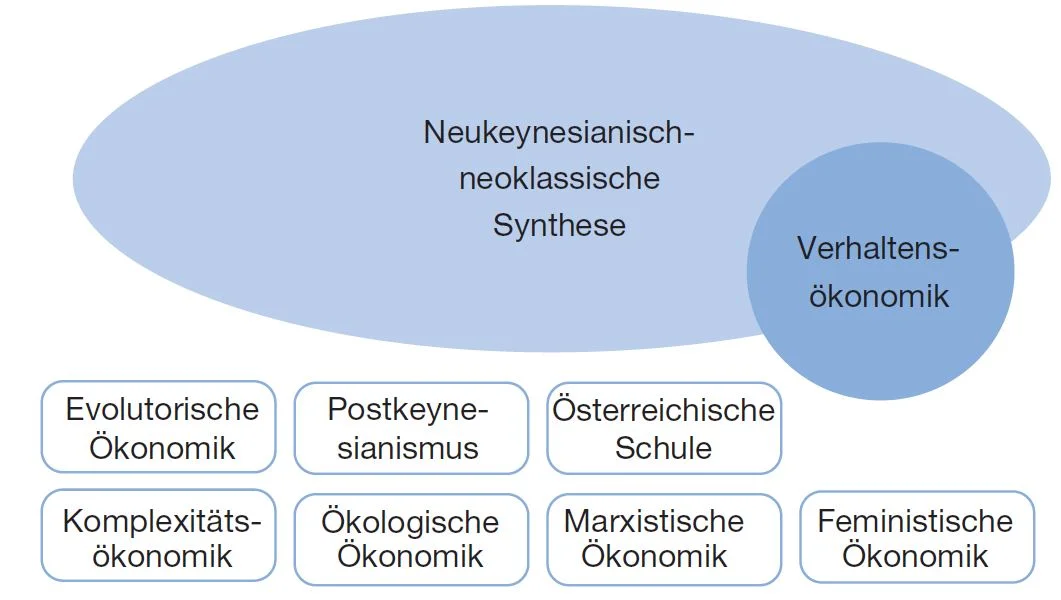
Der Artikel bietet einen informativen aber kompakten Überblick über die Probleme mit dem Denken des VWL Mainstreams, über das Anliegen einer Pluralen Ökonomik und über die Aktivitäten vom Netzwerk für Plurale Ökonomik.
Der Artikel als PDF findet sich hier.

Darstellung der Konstellation ökonomischer Denkschulen und der Dominanz des Mainstreams

The Denial of Death and the Knight of Faith
“You take the blue pill, the story ends. You wake up in your bed and believe whatever you want to believe. You take the red pill, you stay in wonderland, and I show you how deep the rabbit hole goes.”
— Morpheus to Neo, "The Matrix"
This famous movie quote depicts the choice for the main character Neo of either staying in his normal life inside the faked matrix or waking up to the bitter reality where mankind is enslaved to machines. A hard choice between comfort and truth.
When I read the book "The Denial of Death", by Earnest Becker, it felt a little bit like swallowing the red pill.
(I started this post about two years ago but left it unfinished. Recently, when I rediscovered it, I decided it's time to finish...)

„You take the blue pill, the story ends. You wake up in your bed and believe whatever you want to believe. You take the red pill, you stay in wonderland, and I show you how deep the rabbit hole goes.“
This famous movie quote depicts the choice for the main character Neo of either staying in his normal life inside the faked matrix or waking up to the bitter reality where mankind is enslaved to machines. A hard choice between comfort and truth.
When I read the book "The Denial of Death", by Earnest Becker, it felt a little bit like swallowing the red pill.
„A person spends years coming into his own, developing his talent, his unique gifts, perfecting his discriminations about the world, broadening and sharpening his appetite, learning to bear the disappointments of life, becoming mature, seasoned – finally a unique creature in nature, standing with some dignity and nobility and transcending the animal condition; no longer driven, no longer a complete reflex, not stamped out of any mold. And then the real tragedy […]: That it takes sixty years of incredible suffering and effort to make such an individual, and then he is good only for dying.“
It is a brilliant illustration of the absurdity of life: We are able to the highest deeds, we can shape nature according to our imagination, we are equipped with a mind of nearly boundless capabilities but we are still trapped in an animals body. This is the ultimate tragedy of man's dualism: Neither animal, nor god.
„Man is literally split in two: he has an awareness of his own splendid uniqueness in that he sticks out of nature with a towering majesty, and yet he goes back into the ground a few feet in order to blindly and dumbly rot and disappear forever.“
„On the highest throne in the world, man sits on his arse. Usually this epigram makes people laugh because it seems to reclaim the world from artificial pride and snobbery and to bring things back to egalitarian values. But if we push the observation even further and say men sit not only on their arse, but over a warm and fuming pile of their own excrement - the joke is no longer funny. The tragedy of man’s dualism, his ludicrous situation, becomes too real.“
Building on this, the core idea of the book is that human civilization in all its varieties is ultimately nothing more than an elaborate, symbolic defense mechanism against the acknowledgement of our own mortality. To escape from his insurmountable position in life, man is creating so called hero-systems that allow him to transcend into something larger and thereby to overcome his own mortality. From this perspective, all those religious dogmas and beliefs of afterlife, paradise or destiny that people turn to are nothing more than escape mechanisms from the reality of death.
„The cultural hero-system is frankly magical, religious, and primitive or secular, scientific, and civilized. It is still a mythical hero-system in which people serve in order to earn a feeling of primary value, of cosmic specialness, of ultimate usefulness to creation, of unshakable meaning. They earn this feeling by carving out a place in nature, by building an edifice that reflects human value: a temple, a cathedral, a totem pole, a skyscraper, a family that spans three generations. The hope and belief is that the things that man creates in society are of lasting worth and meaning, that they outlive or outshine death and decay, that man and his products count.“
Everyone holds his/her personal dimension of holiness, if not the bible or some other religious construct, then maybe freedom, Marxism, nature or a football club. Here one finds transcendence and immortality and in these personal systems of meaning, one's higher nature and godlike dimension can be celebrated.
„I am nothing and should be everything.“
Personally, yes, I want to leave a legacy that gives my life a meaning, I want to change the world and become part of something bigger. But after reading the book, the question that haunted me, was if this was really the truth? Or is it all just my personal hero-system, an elaborate defense mechanism against the acknowledgement of my own mortality and the meaninglessness of my life? What if my deepest motivations come not from a sense of idealism and noble motives but rather the fear of death?
At least I remember a few encounters where, usually confronted with the possibility of irreversible damage to my body, I have felt a surprisingly deep sense of fear.
It might seem like an absurd accusation at first, too simple and too mad, but Becker argues with a persuasiveness and relentlessness that is hard to reject. Every objection can be fought off by simply pointing to the ingenuity of the mind to invent arguments and "proofs" to protect our belief system. At the very latest since the insights of Freud, we all know that there is a deep unconscious inside of us with its own agenda.
Of course it might all just be intellectual bullshit. Hopefully there is more to our deepest callings and spiritual undertakings than subconscious denial of death. Maybe immortal souls, an afterlife and some kind of god exist. Personally, I currently feel like hanging between the worlds of rational science and spirituality and I am still not sure what to think of the book's core message. Ultimately, I guess it all comes down to belief.
But at least it can’t be denied that Western culture tries to hide all signs of our animal origin, of death and decay. We shave away our hair, we show an absurd degree of body hygiene and we try to hide any sign of our own aging. The higher ones "cultivation" or "socialization", the more sterile is the environment, the more successfully hidden are peoples creatureliness and primitive drives. And do not most of peoples traumas and personality disorders eventually go back to the (sometimes irrational) fear of extinction and death?
But where to go from here?
„How does a man create from all his living energies a system of thought, as Freud did, a system directed wholly to the problems of this world and then just give it up to the invisible one? How, in other words, can one be a saint and still organize scientific movements of world-historical importance? How does one lean on God and give over everything to Him and still stand on his own feet as a passionate human being? These are not rhetorical questions, they are real ones that go right to the heart of the problem - how to be a man?“
Maybe the solution is to give in to our fate and to fully accept that we are merely more than some dirt in a clever arrangement.
I have always been fascinated by those that laughed into the face of death like Tom Lehrer singing "We Will All Go Together When We Go" or Monthy Pythons "Always Look On The Bright Side Of Life". After the death of Graham Chapman, Monthy Python even used to put an urn on stage claiming this to contain his remains and included it in some of their jokes.
This bold acceptance and playfulness seems much more powerful to me than most peoples denial and ignorance. In this regard, Becker puts forward the beautiful ideal of the “Knight of Faith”:
„He accepts whatever happens in this visible dimension without complaint, lives his life as a duty, faces his death without a qualm. No pettiness is too petty that it threatens his meanings; no task is too frightening to be beyond his courage. He is fully in the world on its terms and wholly beyond the world in his trust in the invisible dimension.“
With this ideal in mind, why not take the red pill and go all in? Let's not forget, we might have anuses, but regarding the creation of our lifes here, we are still gods.
So no matter if Becker is right or wrong, his conclusion sounds good:
„Those that are consumed with the most relentlessness, and burn with the brightest flame, seem to serve the purpose of nature best.“
Publications on the Money System
The excuse for severely neglecting my blog in the last months has been my master thesis on "Profit opportunities for the banking system due to deposit money creation and potentials of a sovereign money reform". If you are interested to read it, you can find it here.
As you might know, I am pretty involved in a German initiative to reform the money system so that only a public institution is in charge of all money creation instead of private banks (as they are at present) - the reform is called "sovereign money reform".
Therefore, my current interest is with money and I have written two articles on other platforms (in German though) criticising the contemporary monetary system:
- Blog: Postwachstumsgesellschaft: (K)eine nachhaltige Geldordnung
- Wirtschaftsdienst: Vollgeld und Full Reserve Banking: die Kritik auf dem Prüfstand – eine Replik
And there is a video on youtube of my presentation (in German) at the "2. Ergänzungsveranstaltung des Vereins für Socialpolitik" on the need for a sovereign money reform ("Die Vollgeldreform - warum wir eine neue Geldordnung brauchen").
cool videos and movies
Here is a collection of some extraordinary movies, documentaries or videos that I'd like to share.
Here is a collection of some extraordinary movies, documentaries or videos that I'd like to share.
Documentations:
Human Planet
Brilliant documentary series showing humans life on different extreme environments on earth and their ways of adaption. Each episode deeply touched and perfectly entertained me.
Planet Earth (BBC)
Documentary showing the beauty of life on earth with spectacular views on nature scenes and gigantic herds of animals. Absorbing!
David Attenborough's Africa
Similar to Planet Earth, a magnificent documentary focused on life in Africa directed by brilliant naturalist David Attenborough
Samsara
This documentation is a visually breathtaking journey around the planet showing life of humans and nature. Trailer
Money as Debt
Documentation on the creation and history of money and the effects on human society. It's completely different to how most people think it works. Feels like a strange conspiracy theory, but I promise you, it's all true - I digged deep into that topic and now I'm convinced the money system is compeltely broken and the root cause of many economic problems
Earthlings
Documentation on the human treatment of animals. Rather emotional than objective but it demonstrates the idea of Specism pretty well. If you thought about becoming vegetarian and need more motivation, this is the film to watch
Speeches:
This is Water
Commencement Speech by David Foster Wallace on learning to Think and consciousness. One of the greatest speeches I've watched and going really deep.
Jim Carrey Commencement Speech
A funny, touching and powerful speech by Jim Carrey. I feel that Jim Carrey is one of the few people who have really figured out the big questions of life.
Which country does the most good for the world?
A TED speech by Simon Anholt on a new indicator to measure the goodness of a country
The good news of the decade?
TED speech by Hans Rosling showing you the best stats you have ever seen. Absorbing, entertaining and highly informative. Love this guy!
Charlie Chaplins Speech in The Great Dictator
Clips:
Validation
A touching short movie on validation
Mr Willie (+Remix)
Mr Willie just being awesome and giving BAM!
Rise and Shine
Best sports motivational videoclip I have ever seen! Every time I watch it I feel super-energized and want to do sports.

Tips for Travelling
After two exchange semesters, one in San Diego, USA and one in Taipei, Taiwan and travelling around Asia and Europe I made a lot of valuable experiences that I would like to share here for the prospective traveller. Many of these tips would have been very useful for me during my first journeys and I hope that some of them can be useful to others now. If you've already travelled some continents though, you've probably figured out most of the stuff by yourselve. Yet I hope that you can still take away something.

After two exchange semesters, one in San Diego, USA and one in Taipei, Taiwan and travelling around Asia and Europe I made a lot of valuable experiences that I would like to share here for the prospective traveller. Many of these tips would have been very useful for me during my first journeys and I hope that some of them can be useful to others now. If you've already travelled some continents though, you've probably figured out most of the stuff by yourselve. Yet I hope that you can still take away something. Also helpful: The expertvagabonds "30 Best Travel Tips After 4 Years Traveling The World".
This list is open for revision and if you think I should add something, let me know!
Content:
General Planning
Choosing the route: Obviously you are the best person to know where you want to go. However there are a few things I recommend to have in mind.
First, the more different the culture of a country, the more fascinating and valuable the general travelling experience. Secondly the poorer the country, the more extreme the experiences, the more dangerous the travel and also the psychologically more exhausting the journey. Therefore I recommend to increase your difficulty level gradually and not to begin your travelling carreer with something like Cambodia, India or an African country but instead with a developed country like Japan, Canada, Australia or Europe and to gradually increase the difficulty level.
What I also have to tell myself again and again is "don’t move around too much!" There is this urge to try to see everything but the moving between destinations eats up most of money and time and is also the most unpleasant. Staying multiple nights at a place will save a lot of hassle and enables you to get deeper impressions. Otherwise you might often also regret not having enough time left to really immerse yourself in a cool location.
Also, stay flexible! If all flights and hotels are booked there is no way to grab some of the best opportunities that the journey will offer you. Sometimes you meet cool people that you would like to hang out with for a few days, you want to stay longer or you are bored or even deterred and want to leave as quickly as possible.
From my experience it is best to have a plan about the general route and then plan about 2 days ahead. This gives optimal flexibility and still leaves you on the relatively safe side to get tickets and find good accomodations.
Length: For the beginning, about one month is a good time to explore multiple countries and can enable you to rent out your apartment at home to save some money. Shorter trips will make it more expensive and more superficial, longer trips can be too demanding for the start. However, there are not really any limits and the longer the stay, the deeper the experience and immersion in the foreign culture. I met people that were travelling for 5 years while working part-time jobs or living on their savings and even whole families taking a year off to travel the world together.
Weather and national holidays: Don’t underestimate the importance of the weather - it can make all of the difference. When choosing where to go, check for the general weather and season. Wikipedias “climate” section gives good indications. It’s not only about the temperature but also about rain or monsoon seasons. Also, before you book anything for your trip, get information about national holidays, at best from some local. I travelled during the Chinese New Year to Vietnam and Cambodia and most accommodations were booked out and prices generally doubled.
Accomodation
To book a hotel I recommend the websites agoda.com, booking.com or kayak.com and for hostels additionally hostelworld.com. Generally it is advisable to check back with the hotel to let them confirm your online reservation. I once nearly ended up sleeping on the streets in Cambodia because the hotel had messed up my booking and everything else was booked out because of a national holiday.
If you rent a room on the spot, always let them show it to you before you book it! This can avoid a nasty surprise.
Alternatively you can find interesting offers through airbnb.com, where private persons rent out available rooms in their house. It is generally cheaper, you get in touch with locals and usually have a kitchen available. And finally, if you haven't done yet, I really recommend to try couchsurfing, where you can find people that share their couch for free! Couchsurfing is a great way to get in touch with locals, to build international friendships and to get an authentic experience of a country. Unfortunately though, the couchsurfing website is not designed too elaborately and it can be time-consuming to find a host.
Personally I recommend to regularly switch between different types of accommodation to make to use the different respective advantages: A four-star hotel can be extremely nice to relax a little when you are stressed out and doesn’t have to be that expensive in some countries. A stay with couchsurfing or a lovely guesthouse can be much more charming and often the owners can offer great advice for getting around and stuff to do. A hostel is the easiest way to meet other travelers and join activities if you feel alone - however in dorm rooms there is always someone that snores, someone with smelly feet and someone who gets up extremely early.
Generally you get what you pay for and the comments and ratings on the different websites are usually very helpful. Don’t underestimate the importance of the location as additional transportation costs can turn a formerly cheap price expensive.
Getting Around
Flights: As flight comparison websites, I recommend skyscanner.com and kayak.com. Also if you google “flights from X to Y” or "flights from X" you get to see a list of possible connections and carriers, what can be very helpful for finding cheap connections. For short-distance connections however, flights are generally a bit overrated in my view. Don’t underestimate the time you need for check-in and all the other stuff plus getting to and away from the airport. This turns a quick 1h flight into a 5-6h act. If there is a 5-6 hour bus or even better a good train connection, this can save lots of money, spares the planet and is usually less stressfull as the time can be spent reading a book or listening to music instead of being in the hassle of an airport.
Buses and trains: Buses and trains are obivously the cheapest and usually also the most comfortable way to get around. For buses, check out which type is in use as they can be highly comfortable with lots of leg room or tiny vans where you feel every bump in the road. Here generally the rule applies: The bigger the better.
Car or scooter rental: Having your own car gives a lot of flexibility and independence and won’t be too expensive when shared by 4. Also scooters are an excellent means to explore an area. Compared to the view from inside of a car you feel much more embedded in the countryside and gas consumption is much lower so it’s quite cheap. Depending on the country and route though, driving a scooter can be very dangerous, especially in heavy traffic and on bad roads. Always wear a helmet and test your scooter before renting it!
Don’t forget to organize an international drivers permit before the journey begins!
Public transport: Depending on the country, the public transport system can be the perfect way to get around or be inexistent. In most countries you can use google maps navigation function to find connections for public transport as well as buses and trains. This way in China I could use the local bus system even though there were dozens of buslines at every station, no maps of the line network whatsoever and everything was only in strange Chinese characters.
Bike: I highly recommend to explore cities by bike as you get to see much more of the everyday life and the neighborhoods compared to using public transport. Many cities already have public bike rental programs that are often even free for the first 30 minutes.
Navigation: Obviously the easiest way is using the Google Maps app if you have internet on your smartphone. But even without mobile internet, you can preload the required maps with wifi at your hotel and then still use it as GPS does not require internet to function. Additionally it is helpful to get a map of the local area from your hotel/hostel or some tourist place. While orientating with a map to find north without a compass, this trick is particularly helpful using an analog watch.
Carry-Ons
Backpack: Get a backpack that you are comfortable carrying in full load (10-15kg)! As the backpack I was using in Asia was too short for my rather long back, even carrying it only smaller distances was a torture. As the experience of carrying it can be very different for an empty one compared to the fully-loaded, try carrying your backpack around outside for a bit before starting your journey.
Depending on your need there exist high tech versions designed for camping on the one end of the spectrum or suitcase-like backpacks on the other end. Generally a backpack with many pockets can be practical for organizing your stuff. As always, the more you spend the better the quality; spend between 50€ and 200€.
Packing: Really, don’t pack too much stuff, never more than 15kg! Clothes for one week are sufficient and don’t bring more than two pairs of shoes. In case of doubt, leave stuff at home. You can still buy stuff at your destination if you really need it.
SIM card/Telephone/Internet: If you stay in a country for more than a week it can already be extremely useful to get a local simcard for calls and internet. This is often surprisingly cheap and mobile internet might even be faster than the Wi-Fi at your hotel.
Guidebooks: I go with the flow and recommend Lonely Planet guidebooks or alternatively Rough Guide. Especially once you get used to the structure and organization of the guidebooks, it’s easy to find good advice. Wikitravel.com was also very helpful for me.
Luggage and Gadgets:
- An additional smaller backpack for day-tours is very useful, there also exist super-light ones.
- Pack a bunch of plastic bags for dirty clothes and to organize your stuff.
- To find sleep in buses or overcrowded hostels, earplugs and an eye mask are very useful.
- Bring a breast pocket wallet and a lock for your backpack or the locker in a hostel.
- I can really recommend to get a pair of barefoot shoes like these. They are ultra-light and can be used for sports and hiking as well. By now I even prefer those over sandals i.e. for sightseeing trips. However, you might take some time to get used to them, and the experience might be a bit painful in the beginning until your feet adapt.
- Power adapter: For one country, just get one or two specific adapters. For multiple destinations or an open route, there are multifunctional tool than can switch all countries power plugs like this. Here is an overview of the different international power plugs.
- Bring a light bowl plus a spoon, fork and knive so you are less dependent on restaurants.
- The Amazon Kindle ebook readers are awesome for travelling. They are extremely light and much easier to carry around than books. The new versions with background light even make it possible to read everywhere in the dark and outside.
- Many wonder if they should bring a laptop or not. I usually took mine with me as I found it extremely valuable for organizing my days, to make bookings and to stay connected with friends. Here the benefits of an ultrabook become evident.
On The Road
Prices: Especially right after arrival look and ask for prices all the time, even for stuff you don’t want to buy just to get a feeling for the general price level. If you get to a place and find that one thing is overpriced then probably some more are overprized.
Culture: A good starting point to learn a bit about the culture and history of a country offer the respective lonely planet sections or wikipedia. Watching local movies or books is also a good way to learn about the history and the national identity.
Language: From my experience eventually you get around with English everywhere more or less. The more tourists around, the easier.
Meeting people: Especially if you are travelling alone and look for some company, there are most notably two ways: The first is staying in a hostel, where you can get in touch with other travelers easily and even find people to spend the day with. The second option is to visit couchsurfing events. On that website every member can create an event such as “Frisbee in the park” or “Free Yoga class” and post it on the website. In big cities like Berlin or Madrid there are usually about 5 events every day.
Laundry: t’s usually easy to find places that do your laundry very cheaply for you or if you want to wash it in the sink by yourself, find instructions here.
Writing a blog or diary: During my exchange semesters I used to maintain travel blogs and can really recommend to do this. Firstly, it is a great way to preserve your memories for the future (it's too easy to forget stuff) and to process the experiences and I'm excited about reading my post in 10 years or showing them to my children. Secondly, this is a great way to let family and friends take part at your journey. And thirdly, it is a good way to practice writing and organizing your thoughts what I found more and more enjoyable. I recommend Googles simple and free Blogger Service.
Alternatively you can just take notes about the stuff you have done every day in written or on your smartphone as a note somewhere.
Safety
General: Let your slogan be "Better safe than sorry"! Always have that in mind when you are travelling in unsafer places. Often it is annoying if you have to stay away from delicious-looking food, put on a breast pocket wallet or make other precautions, but compare this to a week of diarrhea or a stolen wallet and it will be worth it.
Take as little valuables with you as possible. Ask at hotels receptions if its safe to lave valuables in the room. If not you can usually leave stuff at the reception or use your safe. While getting around, use a breast pocket wallet for money and cards. If you have to travel with lots of money, hide it somewhere in your clothes or toiletries (I used to put some money bills in an empty shampoo bottle). You can also buy a small lock to lock up your backpack or suitcase if you have to leave it at places that you don’t feel 100% safe about.
Safety Issues: You can check for actual safety issues such as violent protests, actual apidemics or catastrophies here.
Sickness & Medications: Take some basic medications, including painkillers and a diarrhea treatment. If you really need to see a doctor, guidebooks are valuable for finding a nearby hospital. Remember to get travel insurance.
Vaccinations: Visit a doctor to check possibly necessary vaccinations already at least 3 month before the start of your journey. You can check general recommendations based on your destination here.
Food: Go to places where locals eat. The general appearance of a restaurant/imbiss can indicate the hygiene but tourist restaurants can be of worst quality as there is not really any incentive to let people come back. In countries with bad hygiene just avoid street vendors, it’s not only about the ingredients but also how they prepare it - if some white rice is served in a dirty bowl or was taken with a spoon that was earlier used for raw meat than a bowl of rice just isn't safe. Even though the stuff might look delicious, it’s probably not worth a week of diharria. It’s always safer to avoid seafood, meat and fresh ingredients that are not cooked or fried. All the processed food from supermarkets is safe. Bananas, chocolate bars and bread (like baguettes) are an excellent snack for in between as they are cheap, safe regarding hygiene and easy to carry and eat.
Secure your data: Especially if you bring your laptop, I highly recommend making a security backup of all your data and also to copy the stuff from your phone and to leave these backups at the safety of home.
Plan for a stolen wallet: Make a list of all the cards and stuff in your wallet (though you should leave as much as possible at home) and write down emergency numbers to lock your accounts in the worst case scenario.
The Psychology Of Travelling
General: It is easy to handle a big journey like some work that is to be done: Cities that have to be travelled, sights that have to be seen and dishes that have to be tried out. However, a journey is not about getting stuff done. It’s about experiences and joy. I know how easy it is to forget that, but often it is very worthwhile to take a step back and look inside how you feel and what you want to do. If you don’t feel like sightseeing, then don’t! Even if you have a tight schedule and let’s say only 3 days for a place like Tokyo – there is probably more value in hanging out in a nice park, taking time to read a book or relaxing in an onsen instead of checking off boxes from your “sights-to-do-list”. Further, the more I have travelled, the less I enjoy ordinary sights. What I found much more valuable is genuine interaction with locals and immersion in the everyday life by visiting local markets or biking around. Also untouched nature is usually much more fascinating for me than some cities. A helpful practice to take a step back and to stay mindful is meditation. If you want to try it out, there are often free events on couchsurfing or alternatively, try the app “Headspace” for guided meditations.
Fails: You will do a lot of mistakes and make bad or at least non-optimal decisions. But try to see every single mistake as a lesson. Identify the problem and how you could improve on the situation next time.
Contribute: If you travel to a poor country and want to support the locals, buy local products instead of branded chips or coke and stay in smaller places and visit local restaurants instead of a big hotel chain and MC Donalds. You might also consider to donate some money for a good cause.
If ratings on websites were useful to you, also rate your accomodations and if wikitravel was useful to you, also add your advice that was missing.
On travelling alone: What I noticed while travelling alone is that I had generally stronger and also more emotionally intense experiences - bad ones as well as good ones. I think the reason is that travelling alone moves you out of your comfort zone and therefore you just get more exposed to the outer experiences. You are more vulnerable but also more opened to be swept away by the beauty of something in front of your eyes. Also I liked the complete independence - you can always do whatever you want to do. Concluding, in my experience, traveling on your own is more challenging but enables deeper experiences and more independence whereas travelling in company is more convenient and comfortable.

Inspiring Blogs
Here I would like to share my favorite websites and blogs and hope that these posts can also be an inspiration to you. I also added lists with some of my favorite articles.

Here I would like to share my favorite websites and blogs and hope that these posts can also be an inspiration to you. I also added lists with some of my favorite articles.
Mark Manson (http://markmanson.net/)
Definitely my favorite blogger and probably my biggest inspiration to start my own blog! I enjoyed pretty much every single post. He started in the Pick Up Scene and later switched to self-development and relationships in general. Scientific, going deep and well argued.
- Love is not enough
- Shut up and be grateful
- The most important question of your life
- Minimalism
- Guide to happiness
Leo Babauta (http://zenhabits.net/)
As the name indicates, this blog is a bit more spiritual about taking a step back, meditation and minimalism. Finding happiness in the moment and living a grateful compassionate life.
- Become Happy in the Face of Physical Misery
- Letting Go of Judging People
- A Call for Revolt: Advertising is the Anti-Minimalism
Gregory Ciotti (http://www.sparringmind.com/)
"A Fresh Take on Creative Work, Productivity, Human Behavior and Habits"
Abstruse Goose (http://abstrusegoose.com/)
Really cool, slightly nerdy cartoons
Barking Up The Wrong Tree (http://www.bakadesuyo.com/)
If you sign up for the newsletter here you get regular emails with interesting research on a wide arrange of topics such as productivity, happiness education etc.
Single other Posts I recommend:
Meat
“Almost always when I told someone I was writing a book about “eating animals”, they assumed, even without knowing anything about my views, that it was a case for vegetarianism. It’s a telling assumption, one that implies not only that a thorough inquiry into animal agriculture would lead one away from eating meat, but that most people already know that to be the case.”
— Jonathan Safran Foer
If just about three years ago, you had let me choose between a schnitzel and some tofu sausage, I would have picked the schnitzel without thinking twice. The mere title of this post would have made me hungry and there were few things I would have considered more delicious than a juicy steak.
But times have changed.

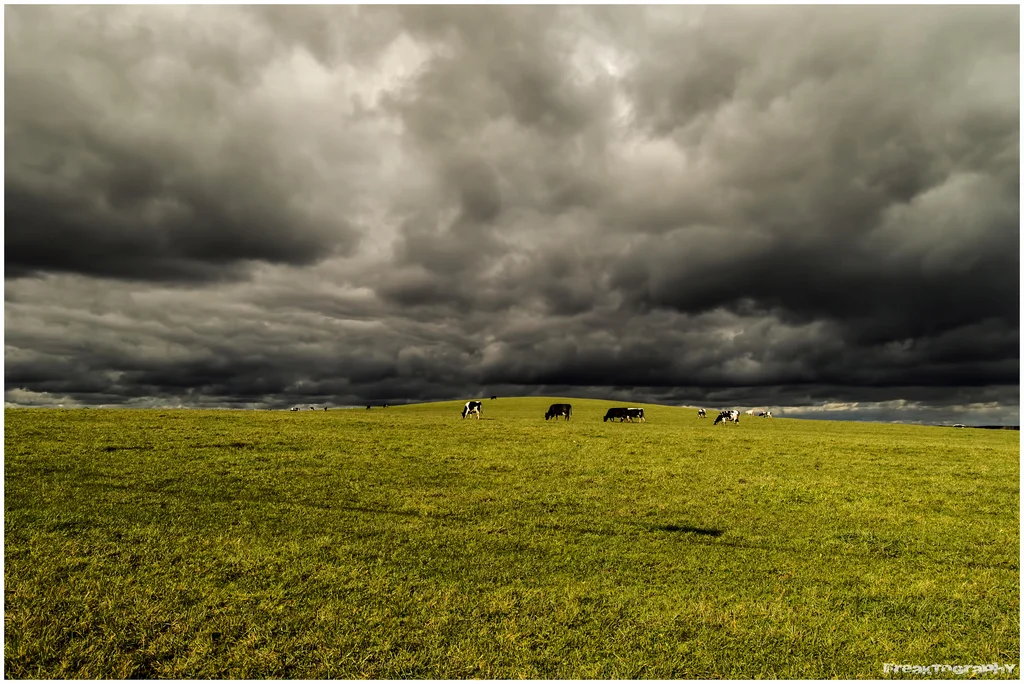
PICTURE BY FreaktographY - CC BY-NC-ND 2.0
„Almost always when I told someone I was writing a book about “eating animals”, they assumed, even without knowing anything about my views, that it was a case for vegetarianism. It’s a telling assumption, one that implies not only that a thorough inquiry into animal agriculture would lead one away from eating meat, but that most people already know that to be the case.“
If just about three years ago, you had let me choose between a schnitzel and some tofu sausage, I would have picked the schnitzel without thinking twice. The mere title of this post would have made me hungry and there were few things I would have considered more delicious than a juicy steak.
But times have changed.
Especially after reading "Eating Animals" and watching numerous documentaries about meat production, I have come to conclude that there are strong reasons to restrain the human desire for meat, as the impact of modern livestock farming on animal well-being, environment and society just isn't worth the cost.
Therefore, about two years ago, I decided to become a vegetarian and in this post, I will try to explain the reasons for making this decision and hope to inspire others to rethink their choice of food.
Albert Einstein said:
„The world will not be destroyed by those who do evil, but by those who watch them without doing anything“
While I strongly agree with these words and feel an urge to "spread the word", it seems that challenging deep-rooted eating habits hits a special nerve. Therefore, the public image of a vegetarian is rather that of an annoying eco-fanatic, spoiling the fun of barbecuing and not an Edward Snowden alike whistleblower enlightening some social ill.
I respect that no one wants others to tell them how to live their life but what makes it especially difficult to keep my mouth shut in this matter is that few people ever really inform themselves about meat production. Rather, people tell me that they don't want to know because of the hard decisions this knowledge would impose on them. And indeed, of all the people I know to have read the book “Eating Animals”, not a single one has not greatly reduced or completely cut out meat consumption afterwards.
This is certainly not the happiest topic to indulge in, but if you've never really made a true effort to inform yourself about meat production, maybe now is a good time. Because what's going on in the meat industry is probably one of societies greatest failings of today and we all bear responsibility.
Pesonally, I have decided not to actively confront carnivores with my concerns but rather passively provide information and only engage in discussions when invited. This blogpost should be seen in this context as my invitation to engage in this controversy with me.
After this preamble, let's move to the various arguments.
Suffering:
„We know that if someone offers to show us a film on how our meat is produced, it will be a horror film. We perhaps know more than we care to admit, keeping it down in the dark places of our memory - disavowed.“
Scandalous conditions that I thought to be horrible exceptions seem to be the norm in industrial livestock farming:
Animals get castrated without anaesthetization, spend their whole life standing in their own shit in tiny cells and get killed as soon as their output (of egg or milk) declines. Then, the economization of the killing process often results in animals still alive while skinned or cooked. Meanwhile, newborn male chicks get chopped right away because of their inability to lay eggs. Often animals are so intensively bred that they can’t carry their own weight and run around with broken bones and deformations, are so sick that they wouldn’t survive without the constant use of antibiotics, are getting so mad in their tiny cells, that newborn pigs have to be protected from their own mothers. You could seriously fill whole books describing the repugnant situation in state-of-the-art factory farms and there are books and movies that do just that. Can You Face the Reality of Factory Farming?
„The question is not, can they reason? Nor, can they talk? But, can they suffer?“

However, if you take into account that for huge stock companies nothing matters except maximising revenue, the status quo seems to be the logical result. Decent treatment of animals certainly can't provide meat for 2$/pound.
Of course not all farms are like that and there are bright exceptions of farmers caring for their livestock as for their own family but think of the output of one of these farms and relate that to the output of a 200.000 strong industrial livestock factory. Therefore it shouldn't be of surprise that currently about 98% of meat production in Germany comes from factory farms.
„The time will come when men such as I will look upon the murder of animals as they now look on the murder of men.“
However, even if you lack my compassion and think that animal's suffering shouldn't concern us, there are still plenty of "rational" reasons to abstain from meat.
Environmental Destruction:
Industrial livestock farming causes extreme environmental damage in the form of deforestation, air pollution and extensive water and land usage (a good overview with lots of charts here).
- Greenhouse gas emissions linked to livestock farming are bigger than the whole transportation sector combined and a recent study even found that it makes up more than half of total worldwide greenhouse gas emissions. This means we can't stop global warming without rethinking our meat consumption.
- Water usage to produce one pound of beef amounts to approximately 2500 gallons of water (9500 liter), the equivalent of taking about 650 showers!
- Massive deforestation in South America occurs to a great deal to provide land for cattle ranching or to produce soy beans - and these beans are mostly not produced for tofu but to feed the livestock.
- Producing a calorie of meat takes approximately 10 times the land usage compared to producing one calorie of plant. We can feed every human on this planet - but not with meat.
- Currently, around 80% of all antibiotics sold in the United States are used on livestock and poultry, not humans. This abuse of antibiotics has already lead to numerous resistant cultures and is a ticking bomb (source).
Maybe the same way as we look down on slavery today, some day our grandchildren will look back and wonder how we could abuse animals so cruelly, destroy our environments so recklessly and deplete our resources so foolishly.
„The tragedy is that factory farming survives despite the widespread agreement that whether we are primarily concerned about animal welfare, our environment or our health, it is ethically indefensible.“
Now, the arguments in favor of meat consumption. Usually, those concern health benefits, argue that eating meat is "natural" or relate to the good taste of meat dishes.
Health:
It is true that an unbalanced vegetarian and especially vegan diet CAN encompass certain nutritient deficiencies (mostly vitamin B12 and D). However, these problems can easily be cured by a well-balanced diet or by taking the corresponding vitamin supplements and hardly make a case for unrestrained meat-feasts. Further, there is good scientific evidence that a completely vegetarian diet is at least as healthy as one with meat.
One should also have in mind that there is a huge industry profiting from the sale of meat and dairy products in control of a gigantic media machinery to influence our worldview. For instance, most people think that milk is healthy as there is lots of suggestive advertisement supporting this view like "contains all the goodness of milk". However, the research on the health benefits of milk is at best unclear.
Finally, proteins can be found in great numbers in beans, corn or oats.
Eating meat is "natural":
Personally, I haven't come to a conclusion regarding the question if it is generally wrong to kill animals for food. If an ancient human tribe hunts a deer for survival, it seems to be the course of nature. However, first we don't need meat for survival anymore but rather eat meat for pleasure. Second, there is a huge difference between this image and the way we get our meat today as animals don't live in their natural surroundings but in extremely overcrowded factories and often even need constant antibiotic treatment to survive at all. Further, the human population has increased massively and by now the business as usual is not an option on our limited planet. Under these circumstances, washing away all the desastrous side effects on the environment with an argument of "naturality" would certainly be naive. What is left to be natural in todays industrialized high-tech world, anyway?
„Since the world has changed so much, the same values don’t lead to the same choices anymore.“
Tradition and social conformism
Changing a traditional christmas dish or rejecting societies food norms can be a tough decision. I can tell that there is considerable social pressure to conform to the norms and to eat meat but this can hardly be an ethical argument rather than an explanation for most people's behavior. Norms can and should change if there is good reason to do so and they already do as more and more people nowadays become vegetarians. Recently I've been attending an event where the majority were vegetarians and it was highly interesting to experience how the eating norm was upside down and it was rather on the carnivores to explain their decision to eat meat.
The good taste of meat:
Yes, meat tastes good - I can't deny that.
And this leaves us with the ultimate decision between eating meat to enjoy the good taste versus restraining this desire to protect the welfare of animals, our environment and society. Or in other words:
„We must all face the choice between what is right and what is easy“
This is the sad truth we are left with today and maybe from this perspective, it gets easier to feel some empathy with the vegan eco-freaks terrorising McDonalds.
Taking Action
Because our choices as consumers directly affect what is produced and how it is produced, there are two approaches to make a difference.
Increasing quality:
The status quo is not only the result of some farmers greed but evolved because of our everyday decisions at the grocery store. If we buy the meat that is cheapest, we force the producers to solely focus on the most efficient production methods, neglecting everything else. Making sure that the meat one consumes comes from farms that treat their animals right, is definitely a step in the right direction to stop animal abuse.
Unfortunately, the negative impact on environment remains the same or might even increase the more space, food and care is provided for animals. Therefore, the logical step is reduction.
Decreasing quantity:
The average German consumes about 1000 animals in his life (a nice illustration here) and about 120 pound of meat every year. That means, every individuals decision to reduce meat consumption makes quite a difference!
Personally, I started with a limit of 500 gram of meat per week and slowly reduced this allowance. Rather than having a cold cut, this allowed me to adapt gradually while finding more and more substitutes. Overall, I found that with a strong motivation, becoming a vegetarian was much easier than I had expected. The adoption period is a bit painful but eventually when I got used to it, surprisingly I didn't miss meat at all and currently am as happy with my vegetarian dishes as before.
„I love sushi, I love fried chicken, I love steak. But there is a limit to my love,“
Veganism:
I am not vegan (yet), but feel a strong sympathy with the cause. While veganism is usually considered as a hopelessly extreme form of activism, by now I feel that the vegan way of life is actually the most coherent and consistent decision given most peoples typical value judgements. I agree that the step from vegetarian to vegan greatly increases the difficulty to find appropriate dishes and has a smaller impact than the step from carnivore to vegetarian but pretty much the exact same arguments against meat apply to the production of eggs, leather or milk.
Changing the industry:
While rethinking and reducing individual meat consumption is an important step forward, it is only a drop in the ocean to change the livestock industry. To make a difference in this domain, it needs lots of political pressure to form new and better regulations. This though, can't arise without citizen's concerted action and participation. This is why I decided to join the German vegetarian association (VEBU), that has lobbying quite successfully for implementing some positive changes in Germany. Likewise, there are countless initiatives around the world fighting to change the livestock industry. So even if one lacks the willpower to resist the temptation of eating meat, one should consider to support this cause at least financially to transform our society (find an effective charity here).
„The greatness of a nation and its moral progress can be judged by the way its animals are treated.“
If I lived in the medievals, I probably wouldn't be a vegetarian because there was no climate change, the earth was not that overcrowded, land and resources were not as scarce and animals lived in much more appropriate circumstances.
But times have changed.
„I could never be a vegetarian – meat is just too delicious!“
Eating Animals (book) - On the eve of becoming a father, the author Jonathan Sebastian Foer examined all the arguments for and against vegetarianism, to decide how to feed his coming baby. Non-judgemental, fact filled and extremely thought provoking.
If you want to read it, I will buy and send you a copy - just send me an email, seriously.
„While it is always possible to wake a person who’s sleeping, no amount of noise will wake a person who is pretending to be asleep.“
Earthlings (documentary) - Emotionally powerful documentary depicting humanity's worst abuses of animals, rather with an in-your-face approach. Highly motivating for becoming or staying vegetarian.
Cowspiracy (documentary) - The film explores the impact of animal agriculture on the environment, and investigates the neglectant policies of environmental organizations on this issue.
A Vegetarian Philosophy (essay) - Philosopher Peter Singers famous essay on vegetarianism.
McLibel Case - A highly interesting lawsuit between McDonalds and two activists that made a number of allegations against McDonald's.
Without Saying a Word - 7 min silent shortfilm displaying consumism and meat production
Speciesism - interesting concept analogous to racism or sexism in the way that different values, rights, or special consideration is assigned solely on the basis of the species membership.
Further Discussion:

Interesting Books
I read a lot in my free time and in this section I would like to recommend the most interesting, inspiring or absorbing books I've read.
I read a lot in my free time and in this section I would like to recommend the most interesting, inspiring or absorbing books I've read.
„So many books, so little time.“

Non-Fiction Books
Inspiration and Self-Development:
The Power of Now - Eckhart Tolle
Probably one of the most important books I’ve read. About living in and appreciating the present moment and weakening your ego. I will write in more depth on the general idea in a separate post.
Daring Greatly: How the Courage to Be Vulnerable Transforms the Way We Live, Love, Parent, and Lead - Brene Brown
The author presents her research on vulnerability as an encouragement to embrace ones vulnerability and imperfections, to live wholeheartedly and courageously. A wonderful, highly inspiring and powerful book.
Denial of Death - Ernest Becker
This book represents the culmination of the authors work on the question of human existence. The basic premise is that human civilization is ultimately an elaborate, symbolic defense mechanism against the acknowledgement of our own mortality. Brought me into a minor existential crises, really deep stuff.
Mans Search for Meaning - Viktor E. Frankl
Description of the authors life as a Jew in a German concentration camp and his psychological and philosophical insights on that. About suffering and purpose - touching and powerful.
The 4-Hour Work Week – Timothy Ferris
A best-selling self-help book on lifestyle design opposed to traditional dull 9 to 5 jobs. Partly a bit extreme but still highly recommended.
Anxiety – Fritz Riemann
The author puts forward his idea of four fundamental opposing human anxieties. The book is a source of encouragement and instruction in the art of perceiving and accepting one's own anxieties.
Models: Attract Woman Through Honesty – Mark Manson
A book on love, relationships and seduction, how to be attractive not based on tricks or games but on honesty and self-development. Very mature and honest book - especially compared to the rest of the pickup industries reads. Opened my eyes in some ways.
Informative:
The Happiness Hypothesis - Jonathan Haidt
A psychological-philosophical persepctive on the big questions that gave me many answers that I've been wondering about. All at the same time, the book is scientifically brilliant, humanely elating, objective and humble in its style, easy to read/understand as well as incredibly dense with insights. Maybe my new favorite!
Why Nations Fail - Daron Acemoglu und James Robinson
A brilliant piece on the big questions that experts have wondered about for ages: why are some countries striving while others fail again and again. Their answer: institutions - but to really get it and learn about much of human history, read it yourself.
Eating Animals – Jonathan Safran Foer
This book is the result of a caring fathers investigation on food production in the developed world. Without trying to convert the reader, the author gives a comprehensive overview about meat production. Don't close their eyes from an inconvenient truth and read this.
Debt: The First 5000 Years – David Graeber
Analysis of the function of debt and money in human history and culture. Might not sound too interesting but it is full with insights you won’t expect.
Quiet: The Power of Introverts in a World That Can't Stop Talking - Susan Cain
Pretty interesting read on Introverts. I bet you didn’t know there are actually biological differences how intro- and extroverts process stimuli. Helped me to accept my introverted side in a world celebrating the extrovert. Partly a bit lengthy but still definitely worth a read.
The High Price of Materialism - Tim Kasser
An excellent and insightful examination of materialisms costs on our societies and a plea for change. Watch an excellent 5min summary here.
Thinking Fast and Slow – Daniel Kahnemann
Summarises the Nobel Prized decades of research on human thinking, notably cognitive bias, prospect theory and happiness. “It is impossible to exaggerate the importance of Daniel Kahneman’s contribution to the understanding of the way we think and choose”.
Memoirs:
First They Killed My Father: A Daughter of Cambodia Remembers - Loung Ung
I bet you have no idea about the horrors of Cambodian history that seems worse than Germans Nazi-history in some ways. This book describes the life of a Cambodian girl during the Khmer-Rouge rule in Cambodia from 1975-1979. A devastating and deeply touching story.
Fiction Books:
The Kite Runner - Khaled Hosseini
Deeply, deeply touching tale set in Afghanistan. You can’t ask for more in a book. Probably my favorite novel. Seriously, read it!
The Pillars of the Earth - Ken Follett
Set in the medievals and taking the perspective of all ranks while covering multiple generations - just epic. So captivating that you might finish this 1000-paged book in a week.
Fall of Giants (Part I of the Century Trilogy) - Ken Follett
As epic as Folletts book above, this trilogy is taking place during the First and Second World War and gives an in-depth perspective on peoples lives in the different countries and circumstances. Conveys the politics and causes behind peoples views and decisions better than any history textbook.
On the Righteous Mind and How not to Win an Argument
There is the common view that the truth can be found through reason and argument. That if only people get access to information and the knowledge from science and research they will adjust flawed opinions and convert to the truth no matter how they personally feel about it. This is the ideal of science, that man can leave his emotions and personal views behind on the road to objective insight.
“A scientific man ought to have no wishes, no affections - a mere heart of stone.” — Charles Darwin
But then there is an opposing view, that man is a self-righteous scumbag, mostly using his mental faculties to win pointless arguments and to justify his egocentric worldview.

There is the common view that the truth can be found through reason and argument. That if only people get access to information and the knowledge from science and research they will adjust flawed opinions and convert to the truth no matter how they personally feel about it. This is the ideal of science, that man can leave his emotions and personal views behind on the road to objective insight.
„A scientific man ought to have no wishes, no affections - a mere heart of stone.“
But then there is an opposing view, that man is a self-righteous scumbag, mostly using his mental faculties to win pointless arguments and to justify his egocentric worldview.
In his book, "The righteous mind" Jonathan Haidt elaborates on this second view and presents extensive research on how the human mind is not a cold rational computer but a highly complex, emotional system that is usually a self-righteous defender of pre-made gut-decisions. Haidt argues that usually our experiences, prejudices and social influences shape our intuition which in turn is determining our judgements. Only afterwards, when a decision is already made up, our mind is employed to find reasons to justify our point of view. Therefore, our mind is more of an inner lawyer defending our public image than judge or scientist. We might proclaim to endorse the highest deeds but after all we are just fallible humans, reluctant to loose an argument.
„Anyone who values truth should stop worshipping reason.“
Just think of the last time, you tried to convince an ultra-religious person of Darwins theory of evolution. Logic and reason certainly didn't help you much! Same goes with many arguments about trivialities when arguments quickly turn into a verbal shit fight where adopting the other persons point of view would be seen as proving their higher intellect and giving in would be taking as a hit for the ego. Brain-researchers have found that once an argument turns this way, the area of the brain responsible for rational argumentation gets completely turned off and chances of agreement turn towards zero! Interestingly, there was even a sarcastic treatise by the German philosopher Arthur Schopenhauer on "The Art of Being Right: 38 Ways to Win an Argument".
„If you’re losing an argument, start correcting their grammar!“
To illustrate this, Haidt employs the mathaphor of the mind being the rider of an elephant depicting intuition and feelings. Only in a very calm state can logic and reason guide the way but usually the elephant decides where to go and the mind has to follow.
In a study that demonstrates this effect, participants were confronted with different disturbing stories (for instance about two siblings having safely protected intercourse) and asked what they think about this. When explaining their judgements the participants came up with the weirdest arguments and when these were refuted by the experimenter they didn't change their opinion but desperately tried to come up with better rationalizations instead of admitting that it just feels wrong. It seems, sometimes we are trapped in our own reasoning and can't see through to the true foundations of our judgements.
A highly interesting concept in this context is the psychological concept of cognitive dissonance. Cognitive dissonance is the mental stress or discomfort experienced by an individual who holds two or more contradictory beliefs, ideas, or values at the same time, or is confronted with new information that conflicts with existing beliefs, ideas, or values (example: being convinced that tallness is always a good thing and then sitting in an airplane). To prevent this awkward state of cognitive dissonance people try to shield their mind from anything that is contradictory to their worldview and if that fails might even add strange new beliefs to justify their behaviour and so to create mental harmony.
From all these mechanisms, an answer can be derived to the question:
„Why do you see the speck in your neighbor’s eye, but not notice the log in your own eye?“
Therefore, changing other people's worldview through reason and logical argument is usually doomed to fail. It doesn't matter if a belief is reasonable or far from the truth, once it is established there is a strong tendency to defend it. Additionally most people hold an extreme certainty regarding the truthfulness and objectivity of their own opinion. This in turn entails an urge to convert others to their own, truer perspective - be it regarding politics, religion or the right lifestyle (as hippie, buddhist monk or beauty queen for instance). These attempts of persuation are usually just an annyance to others and are quickly blocked off. However, sometimes there are people with important insights that ought to spread and nevertheless people will undifferentiatedly also shield themselves from these arguments to protect their own worldview.
If a legitimate insight is about the magnificence of the Batman movies but others don't listen to the advice to watch them, it seems unfortunate. But if the majority of people ignores all appeals to stop slavery, racism or warnings about global warming it is tragic, especially if the messenger is exposed to general ridicule or worse forms of society's self-defence (as Galileo had to find out the hard way).
It seems, mankind is trapped in his own self-righteousness.
So is there a way to get around this mechanism?
Unless one is Jesus, the Dalai Lama or Oprah Winfrey (or has comparable social approval) challenging other people's worldviews directly will pretty much always be taken as an know-it-all annoyance and therefore ignored. Instead, it seems necessary to carefully address the emotional sphere (the elephant) first. Only if this has successfully cast doubt on the foundation of a former worldview, reason and logical arguments will fall on fertile ground. Additionally, even without explicit argument, the opinions of friends and peers have a strong effect in the long term. From this follows, that the more people have adopted a new perspective, the easier it is for others to follow suit. Here though, it should be kept in mind that the opinion of the majority is rarely a strong indicator for truthfullness despite it bringing a feeling of legitimacy.
„Friends can do for us what we cannot do for ourselves: they can challenge us, giving us reasons and arguments that sometimes trigger new intuitions, thereby making it possible for us to change our minds.“
But more important than changing others, it is to improve oneself. As argued above, being human means being subjective and biased in one's perspective. Not denying one's self-righteousness can be the first step to betterment. This means one can never be completely certain regarding one's own perspective and opinion and should regularly confront it with critique and challenging opinions. Instead of holding an opinion with certainty until it is disproved (as most people do) one should better doubt the own opinion until it has been extensively tried against all critique. If more people actively searched exposure to opposing opinions every now and then, examining them with an open mind, the truth might gain substantially.
Further, I feel it to be important to redefine what it means to win an argument:
Not to triumph over the other but to gain new insight. Of course it is easier to agree to this ideal than to live by it and from time to time even the noblest thinker will fail to constrain the ego and gets will lost in a pointless dispute. But it seems that many people don't even hold this ideal in their conscious mind and give more respect to those with a smart tongue and firm convictions instead of those that are open to doubt and critique.
Nevertheless, there is certainly no easy way to overcome our self-righteousness and even Jonathan Haidt concludes that it seems impossible to change our human nature in this regard. Mankind is and probably always will be a self-righteous scumbag.
But acknowledging that oneself is part of this strange group and carrying the own opinion with a bit less certainty might lessen our collective burden a little bit.
For argument’s sake (video) - 10 min TED talk by Daniel H. Cohen who redefines what it means to win an argument.
Thinking, Fast and Slow (book) - Daniel Kahnemanns bestselling book on the workings of the mind
The Righteous Mind (book) - Moral psychologist Jonathan Haidt explaning brilliantly how our righteous mind works and why Good People Are Divided by Politics and Religion
Whats wrong with Economics?
I want to understand the big relationships in our world. I want to learn the reasons of unemployment and inequality; how to design successfull economies and how to prevent financial crises.
I am as passionate about economic issues as one can be and this is why I have been studying economics for the last 5 years.
Unfortunately, to say that I am a little unsatisfied with my major would be a strong understatement - I am deeply frustrated.
In this post, I'll try to explain why that is and what's wrong with the current state of economics.

I want to understand the big relationships in our world. I want to learn the reasons of unemployment and inequality; how to design successfull economies and how to prevent financial crises.
I am as passionate about economic issues as one can be and this is why I have been studying economics for the last 5 years.
Unfortunately, to say that I am a little unsatisfied with my major would be a strong understatement - I am deeply frustrated.
In this post, I'll try to explain why that is and what's wrong with the current state of economics.
It might all have began with physics envy:
In the history of the discipline, the early economists tried to follow the approach of physics in describing the world through mathematical equations to depict economic behavior. This approach seemed so precise, so objective, so scientific. Therefore, the most common tool of the contemporary economist are mathematical-theoretical models. And this is how it works:
First, assume that everyone is homo oeconomicus - perfectly rational, future-knowing, completely egoistic, emotionsless and constantly trying to maximise one's "utility" (usually that is to maximise consumption and minimize the amount of work).
Second, assume that all goods are identical, markets are in equilibrium and that there is perfect competition between profit-maximising firms.
Third, assume that money doesn't have any effect on the "real" economy so you can neglect banks and financial markets.
And voilà - you have a foundation to begin your economic analysis!
Starting with this "foundation", economists feel free to assume more just as they please. The motto is: The more advanced, the more ridiculous the assumptions.
This is a list of additional assumptions of typical economic trade theory, here analyzing two countries with two different commodities:
The only inputs for production are labor and capital and these inputs are homogenous that is, there is no differentiation between capital as a factory, a street or IT systems, the only thing of interest is total capital and total labor.
Both countries have identical production technology, something like: Output of food equals amount of capital squared + amount of labor squared
Production is assumed to exhibit constant returns to scale (that is if you double inputs, you double outputs)
Labor and capital move freely within countries but can't move at all between countries
Commodity prices are the same everywhere
Perfect competition, full employment (no corruption, monopolies, unions, politics)
No transport costs or trade barriers
All consumers are identical, have the same income and have constant preferences (that is there is a constant ratio of how much of each good they want to consume).
Now of course one needs to make some simplifications to model reality. But economic models are not simplifications of reality, they are build on top of reality, trying to squeeze it into a mathematical formula.
And then, as if there were no assumptions at all, as if reality and the model were the same, economists feel free to transfer all insights from their model to reality. This leads them to conclude with strong certainty that free trade is good for everyone and that taxes and tariffs are usually harmful.
„The economics profession went astray because economists, as a group, mistook beauty, clad in impressive-looking mathematics, for truth.“
To illustrate the way how economists use to think, following is a typical exercise from my advanced microeconomics class:

I have calculated hundreds and hundreds of these kind of tasks in all thinkable variations but we rarely leave our models behind to look at real firms, institutions or distribution.
At the beginning of the economics education at the university we usually prove that markets are "efficient". This we call the "Fundamental theorem of welfare economics".
If you wonder about the meaning of "efficient", you need some background information:
Any analysis that includes value judgements, so called normative analysis, is considered as not being scientific and therefore taboo. To circumvent the problem of not being able to make any judgement at all, economists invented the concept of "pareto-efficiency": A situation is defined as pareto efficient if no one can be made better off without making someone else worse off. It doesn't matter if the cake is shared equally or one get's it all, as long as no piece goes to waste (that means a situation where one dictator owns everything is still pareto-efficient!).
The economists next trick is to use the concept of "welfare", which is defined as the sum of all the "utility" of all the homi oeconomici in a model. So if some policy can increase overall "welfare" (i.e. by somehow increasing production/consumption) or bring about pareto-efficiency, economists will usually call for this policy to be implemented. As an example, here is a paper that calculated (using a model of course) a 4,7% "welfare" increase for Germany if the TTIP trade agreement would become real.
Distribution, justice or any of those things not included in the "utility function" are completely neglected, they are pretty much invisible to the contemporary economist. "Efficiency" is all the contemporary economist can see.
Further, while mathematicians are well-respected by economists, other social sciences such as sociology, politics or history are generally looked down on as they lack the "scientific" language of mathematics. What these do is just blabla, definitely nothing scientific.
For me it is incredibly frustrating if I sit in the lectures and all they teach me are horribly complicated mathematical models with ridiculous assumptions, which we use to precisely calculate some "welfare" gains and then find some neoliberal policy recommendations (financial deregulation, free markets, low taxes) to increase pareto-efficiency.
I remember how in earlier semesters (when I was less critical) I often left lectures puzzled, why those stupid politicians didn't listen to the economists good advice?!
Take minimum wage, the economics demand and supply curves seem to prove that a wage above equlibrium leads to unemployment (nice graphical illustration here). However, leaving the world of theoretical modelling behind and looking at the real world, empirical studies couldn't prove this effect. Instead the effect of a minimum wage on employment seems highly ambiguous because there might be macroeconomic effects the model couldn't grasp. Still, at the university we only focus on those supply/demand graphs and get indoctrinated that minimium wage leads to unemployment. Is that scientific?
And it's not that using those mathematical models is the easier way to approach reality. It rather seems that the most ridiculously complex models bring the smallest insights (if you can derive any insight regarding reality at all). To illustrate this, here you can have a look at a basic set up of a modern macroeconomic model (the equations start at slide 7).
I remember how confronted with all those complicated equations and graphs that grew in complexity with every passing semester, I started to think that economic relationships are just too damn difficult to understand. I felt like the more I learn, the more I know not to understand.
Now, given this frustrating situation, imagine that at some point, rather incidentally you find out that there are actually many better and much more promising ways to do economics. Schools of thought that go much deeper, don't rely on those ridicouls assumptions and seem to examine the real world. They just don't teach you those at the university!
The following picture gives an excellent overview of the many different schools of economics. However, at universities 95% of economics classes are only based on the second school, neoclassical economics. And that is the status quo pretty much everywhere in the world!

„Although we are the strongest believers in human freedom of choice, we do not allow students to choose their own school of economic thought; we teach them the mainstream only. After they are safely indoctrinated for a couple of years, only then may they learn of alternative, “heretical” approaches - and a history of their own field.“
One final example regarding money and banks to illustrate what's going on:
The common view among mainstream economists on banks is that banks collect savings and then lend them on to those people that need credit.
The problem with this view is that it is just plain wrong.
Private banks actually do create new money every time they extend a credit and if you look at the institutions and bank balance sheets you CAN'T come to a different conclusion (here is an excellent description of the process by the Bank of England).
What's especially interesting here is that about 100 years ago, this was a known fact by economists. Over the last century though, the truth has been unlearned by a whole discipline! (a recent study brilliantly illustrates this phenomenon). Absorbed in their models, assuming that banks are mere intermediaries, economists have managed to turn away from reality. That is as if contemporary astronomists would unlearn that the earth is round and again start believing in the flat earth model again!
Additional fun fact: Before the financial crisis hit, banks and financial markets were pretty much completely excluded from economic mainstream models. They were seen as mere intermediaries, not affecting the "real" economy.
Recently, even the queen wondered why no one saw the crisis coming...
The way the discipline has taken, as described in this essay has arrived at a point that is unacceptable to the critical mind. If some of the old great economists knew what has been made from their ideas, they wouldn't just turn over in their grave, they would rotate (as a friend of mine used to say). Therefore, a broad coalition of students has emerged in the last years, demanding change at their universities. Last year this has culminated in a global call for more pluralism (here the open letter). So finally there is a bit of hope.
Still, one might wonder how this state could emerge and why it doesn't happen that better ideas flow in to defeat the old ones. As you can imagine, I have long wondered about that. It seems a part of the answer is rather profane and has to do with the way academic achievement is measured:
To become a professor, you need publications in top journals. And if you want to publish in a contemporary journal you need to follow the rules: build a mainstream model, use assumptions (it is actually a quality criterion to use all those strange assumptions mentioned above, this is called being microfounded). But if you come from a different school of thought, forget it. This is the story I heard from the "outsiders" again and again.
And perversely, as the study "The Superiority of Economists" describes, criticising (and thereby citing) a mainstream article actually strengthens the author as this improves his citation-ranking. As a matter of fact, heterodox (=non-mainstream) economists and other social-sciences cite the mainstream but the mainstream doesn't cite they them back. It is a closed society and the syscitation tem is cementing the status quo - once a particular path has been taken, it's hard to go back.
There is the famous analogy of scientists sitting in their ivory tower, secluded from the real world.
If philosophers or mathematicians sit up there, it sucks.
But if economists are settled up there, disconnected from reality, but nevertheless advise politicians, then financial crises break out, nations fail and ultimately people suffer.
„The ideas of economists and political philosophers, both when they are right and when they are wrong are more powerful than is commonly understood. Indeed, the world is ruled by little else.“

Cool Challenges
Personally I enjoy to regularly set myself new challenges and to try out new stuff. Following is a list with multiple interesting challenges and inspiring "Life Hacks" that you could try if you'd like to spice up your life a little. I will probably write about my motivation and experiences about some of the items below in some more detail in my blog.
Personally I enjoy to regularly set myself new challenges and to try out new stuff. Following is a list with multiple interesting challenges and inspiring "Life Hacks" that you could try if you'd like to spice up your life a little. I will probably write about my motivation and experiences about some of the items below in some more detail in my blog.
If you know something I should add to the list, let me know!
„There are no negatives in life, only challenges to overcome that will make you stronger.“
Embrace the cold: Cold shower challenge
If you are very sensitive to coldness, there might be good news: It's all about the right training - you can change that. Read here about "The Iceman", Wim Hof who ran a marathon at the northpole - in shorts and barefoot. So if you want to build a new relationship with the cold read this and check out his website here. For the start I recommend cold showers - I started this a few month ago and definitely notice a positive effect on my cold-resistance. Additionally cold showers boost your health, wake you up instantly and make for an excellent will-power training. More info about the cold shower challenge here and here.
100 Push Ups
The idea is pretty simple: 100 push ups in 6 weeks. If you bring up the willpower to stick to the schedule it seems possible. I once got up to 80 until a cold pushed me back. Infos here.
Learning to do a handstand
If you've always wanted to be able to do a handstand, here is a method saying it's possible to learn this in a month. Currently working on this and slowly seeing progress. More info here and here.
„The greater the obstacle, the more glory in overcoming it.“
Change to a motivational password
More of a life hack than a challenge: Make your password a daily reminder for something important to you. Read this inspiring post on the idea about it.
Try Meditation (for 10 days)
There are countless scientifically proven benefits of regular meditation and if you've never given it a chance, maybe it's time to try. For the start I recommend using the headspace app for guided meditations or to look for a local meditation group (often free). Read more about my thoughts on meditation in my correspondent blog post.
Alternative Sleeping Cycles
There are people that claim it is possible to reduce sleeping time to a total of 2 hours a day (30 min of sleep every 6 hours) without any negative side effects. Scientific evidence is actually in favor of multiple cycles and proves the positive effect of napping. I tried a 3 cycle rythm in Taiwan and it definitely reduced my total sleeping time. Sounds crazy, right? More info here and here.
Lucid dreaming
Lucid dreaming is the awareness during a dream that in fact you are dreaming. This enables you to actively take control and try out the crazy stuff, you wouldn't do in real life. While it seems that some people happen to experience this naturally once in a while (I don't unfortunately) there are people claiming its possible to train this. More info here and here.
„It’s not happiness that brings us gratitude, it’s gratitude that brings us happiness.“
Integrate a gratitude habit
Cultivating more gratitude is proven to boost your happiness and has multifold positive effects on your life. Here is a guide how to integrate a gratefulness routine into your daily life. I recommend putting three items on your bed pillow to remind you to be grateful for three things before going to sleep and putting them back on the pillow in the morning after getting up.
No-Poo Method (No Shampoo)
While many people wash their hair daily with shampoo, the over-washing removes the hair's natural conditioning and often causes an overproduction of grease. Therefore the idea of the "noo-poo" movement is to go back to the roots and to get the hair accustomed to its natural beauty. After an adjustment period participants claim to improve their hairs condition. More info here and here.
Try barefoot shoes
After a recommendation from a friend and reading again about barefoot shoes in a book I bought a pair and totally got into it. It takes an adjustment period though and you should really start slowly to give your feet enough time to adapt. However, I enjoy a much more natural feeling while running, feeling every stone and the features of the ground and because complex running shoes reduce your feet to primitive stumps, it is claimed that barefoot shoes are much healthier for your feet. I recommend Merells Vapor Glove or Vibram Fivefingers.
Cut out on something/Fasting
You might find that after an uncomfortable adjustment period, you need much less than you had thought. So why not try this out on something that you've always wanted to get rid off? For instance you could try coffee, meat, nicotine, alcohol, porn, sweets, facebook, fast food, tv or computer games. Begin with something like 2 weeks and extend if you like.
Language learning
If you hate learning languages and consider yourself plainly bad at languages the reason might just be that usual learning methods and lanugage classes suck. Get inspired by a TED speech from a guy that manages to become fluent in new languages in three month here (he also used to consider himself bad at languages). I tried his approach travlling Spain for two weeks and can confirm that it is much more effective than language classes - and also much more fun.
30 mini challenges for 30 days
Read more here.
Democracy and Participation
“Democracy is the worst form of government, except for all those other forms that have been tried from time to time.” — Winston Churchill
What makes some nations great, people there living in dignity and prosperity whereas other states fail, again and again, trapped in poverty and misery?
I have often wondered about this question.
Common explanations focus on differences in geography, resource endowment, the amount of capital, culture or religion but these answers have never really satisfied me as they didn't seem to go to the core of the problem.
Then, very recently I stumbled on a new explanation, as simple as convincing: Institutions.

Demonstrations on Tahrir Square, Egypt. Picture by Jonathan Rashad - CC BY-NC 2.0
„Democracy is the worst form of government, except for all those other forms that have been tried from time to time.“
What makes some nations great, people there living in dignity and prosperity whereas other states fail, again and again, trapped in poverty and misery?
I have often wondered about this question.
Common explanations focus on differences in geography, resource endowment, the amount of capital, culture or religion but these answers have never really satisfied me as they didn't seem to go to the core of the problem.
Then, very recently I stumbled on a new explanation, as simple as convincing: Institutions.
In their brilliant book “Why nations fail” Daron Acemoğlu and James Robinson propose to differentiate between inclusive (serving all the people, democratic) and extractive (serving a small elite exploiting the mass) institutions and give numerous historic examples of countries striving whenever inclusive institutions emerged and countries failing under extractive elites. Further, there is a vicious circle as extractive political institutions usually create extractive economic institutions through corruption and cronyism and vice versa.
Following this explanation, the problem with extractive dictators such as Kim Jong Un or Robert Mugabe is not a lack of talent but that their interests don't extend to general economic prosperity. Because the creative destruction that comes with growth brings change, change brings new power relations and new power relations threaten the power of those in charge they simply don't want growth for their countries.
„Poor countries are poor because those who have power make choices that create poverty.“
It seems that with these simple insights, you can explain a lot of human history, such as why Great Britain started the Industrial revolution or how the differences between North and South America emerged (the geography of the South enabled huge slave plantations and therefore led to massive inequality and extractive institutions but as this was not feasible in the North, a much more equal and inclusive settler society emerged there).
After reading the book I came to think about the standing of developed Western societies of today. Where should we place developed countries such as Germany or the USA on a scale from 1 to 10, with 1 as completely extractive (North Korea might be a good candidate) and 10 as a perfectly inclusive society?
As everyone has the right to vote and as an Afro-American US-president and a female German chancellor seem to prove the possibility for everyone to make it to the top - how about a 9? Or if you think about the generally poor voter turnout, the high inequality and the power of multinationals is a 5 maybe more adequate?
Certainly, we have achieved historically unmatched degrees of freedom, justice and prosperity. Politicians and institutions are generally supposed to serve the majority of people and I am convinced that real change is possible if the great mass calls for it.
Nevertheless, I worry that we are currently headed in a dangerous direction.
While formal power lies with the people, practical power is not distributed evenly. Massive lobbying and interest groups by multinational corporations undermine our governments capacities of act. Moreover, I am convinced that todays financial markets are not working for societys general prosperity but for a tiny elite enriching themselves - they are extractive in that sense. Also, financial inequality has reached dramatic scopes concentrating too much power in the hands of few. Warren Buffett, one of the richest man on earth even stated:
„There’s class warfare, all right, but it’s my class, the rich class, that’s making war, and we’re winning.“
How did we get here and who is to blame?
As always it is easy to point the finger on greedy bankers or big multinationals.
But maybe some of the responsibility is not to be found with others but with ourselves.
Dulled from the economic success and general prosperity of recent decades, too many people have abandoned the stage of democratic dispute. As the struggle for democracy seemed to be won and over, most preferred to focus on their own success and materialistic well-being so that the public sphere had to take a back seat.
Politics has become infected by pop culture and a politicians looks or scandals receive more media attention than factual party programs or discussions. Political debates are considered boring compared with celebrities eating cockroaches in trash tv.
It seems, the underlying views on politics are that:
- the state and government is some detached institution that one is not part of
- one doesn't have any influence because "those at the top" do whatever they want anyway
- participation in politics is something for those people that have too much time and a need for feeling important
- democracy means voting every few years
- why politics if you can watch silly cat videos on youtube?
But democracy is not a spectator sport.
„To make democracy work, we must be a notion of participants, not simply observers.“
I'm sure you agree that there are many issues of great importance that deserve urgent attention. There is inequality & injustice, poverty, corruption, climate change (including overfishing, deforestation, species extinction...) and recently the financial crisis.
What has to change? What makes you angry? How would you redesign our society?
„Our lives begin to end the day we become silent about things that matter“
Already, there is no lack of people being enraged about these issues.
In Europe there is a high share of so called frustration- or protest-voters that tend to vote for extremist positions to express their anger about politics. Worse are only the non-voters, completely leaving the field to those they criticise.
My theory is that a part of the problem here lies with the natural reaction that people show to these issues which is shaped by our evolutionary functioning in groups: The natural rationale to sanction antisocial behavior through angry slander and non-cooperation. "Little Jimmy peed in the swimming pool!" - "Bah, we should break the contact and never talk to him ever again!"
While this behavior is highly effective in small social circles to make people comply with the interest of the group, unfortunately it seems rather useless in the political sphere.
Instead, to have an impact on politicians and how our society is functioning, it requires active political participation.
With this though, I don't simply refer to voting.
In my opinion, even if done regularly and responsibly, voting once every couple of years is not sufficient. Elections only let you choose between a small variety of paths that our society ought to take. But these paths were designed by others and therefore choosing a party usually feels like a decision of least-bad. Active participation on the other hand means to be part of the construction of that path.
To bring topics of importance to the political agenda, to inform those in charge about the needs of "normal" citizens and to give a counterweight to the massive lobbying of corporate interest groups it requires active participation from many citizens.
I've tried to depict different types of participants according to their political participation on the one hand and their political interest and emotional engagement regarding politics on the other hand. In terms of political participation, I propose the following stages:
Stage 0: No voting
Stage 1: Regular voting
Stage 2: Regular voting plus (passive) membership in parties or initiatives, occasionally joining demonstrations or other campaigns
Stage 3: Regular voting plus active membership in parties or initiatives, participation through multiple channels
Where would you find yourself in the following graph?

Usually, when I get to see the German parliament building, an imposing structure with its trasparent dome, the imposing flags of EU and Germany and the giant letters "Dem Deutschen Volke" (to the German people) I get goosebumps.
Not from of a feeling of national pride or patriotism, but because of the fundamental and historic significance that this edifice represents as the beating heart of Germanys democracy.
I become conscious of all those terrible years under Nazi occupation, all those years of people struggling for justice and representation, all those lives lost in that fight.
To our great fortune, now times have changed and finally the government is supposed to serve ALL the people.
This development can and must not be taken for granted.
We have a duty to invest time and devotion to preserve this achievement.
About two years ago this insight struck me. Since, I have joined a political party and started to actively support different citizens initiatives. And what surprised me, was how much easier it was to actively participate than I had expected. Of course this has to be taken with the humility that you are just one of mankind on a planet of billions and that democracy means that the power of individual people is supposed to be limited. But with this in mind it is definitely possible to be heard and to make an impact, if you only try!
This job will require much time and energy but I think that one will rarely regret the time spend this way. It feels empowering to work on improving our society and can bring much fulfillment and meaning to a life.
So if you are unsatisfied with politicians, join and influence a political party. If you want to reform the financial system, join one of the many initiatives. If you are enraged by corruption, support Transparency International. And if you are angry and not giving a fuck, drive randomly around the city on your bicycle with a banner around your chest and a megaphone to address social issues (as one guy in Berlin really does!)
There are countless groups working for change that are happy about every support they can get. In my experience the smaller the organization the easier to participate and the bigger your impact. And if you really don't have the time, at least donate to some cause so that someone else can do the job for you.
„Democracy is a system ensuring that the people are governed no better than they deserve.“
In most developed countries we do have the inclusive institutions to empower the masses. But only our collective participation can bring meaning to this historic achievement.
I think there is still a great potential in our societies and if many people get engaged in improving it, we can achieve sustainable prosperity and justice for everyone.
We can create our utopia here on earth.
Why Nations Fail - TED video presentation by one of the authors mentioned above presenting the key points of the book
On the Pursuit of Happiness
During my own search for happiness I have come across various sources of insights and advice that have been very helpful to me. In this post I would like to share the best texts, videos and books I have found and also put forward some of my own ideas about happiness.
So ... what is happiness?
Maybe being with a loved one? The intensity of a crazy party? The peace of wandering in nature? Or laughing your ass of because you accidentally kicked your roommate in the balls?
And what makes up its importance in our society?
Is a life of maximum happiness a successful life? Would it be justified to measure a countries success through the average happiness of its citizens as the Happy Planet Index does? Should one agree to Jeremy Bentham, founding father of utilitarianism, saying:
“It is the greatest happiness of the greatest number that is the measure of right and wrong”

During my own search for happiness I have come across various sources of insights and advice that have been very helpful to me. In this post I would like to share the best texts, videos and books I have found and also put forward some of my own ideas about happiness.
So ... what is happiness?
Maybe being with a loved one? The intensity of a crazy party? The peace of wandering in nature? Or laughing your ass of because you accidentally kicked your roommate in the balls?
And what makes up its importance in our society?
Is a life of maximum happiness a successful life? Would it be justified to measure a countries success through the average happiness of its citizens as the Happy Planet Index does? Should one agree to Jeremy Bentham, founding father of utilitarianism, saying:
„It is the greatest happiness of the greatest number that is the measure of right and wrong“
If you are inclined to agree, you should mind the following experiment:
In 1956 neuroscientist James Olds connected rat brains with an electrode the rats could activate through a switch in their cage. Whenever the rats activated that switch, they received a mild electric shock to their brains reward center and that's what happened: They got so crazy for receiving those shock-rewards that obsessively activating that lever they completely forgot to eat, to drink or even to copulate. In their pursuit of happiness they put up with their own death.
With this experiment in mind, the question should be asked if happiness is anything more than a chemical motivator to trick us into certain behaviors? For instance, as sex is highly useful for the survival of our genes, naturally it is rewarded with a flood of dopamine and therefore happiness.
There is a thought experiment called the happiness machine: Imagine you could install some gadget in your brain that released endless feelings of happiness and joy. Would you want to use that machine?
If yes, how is that different to a junkie hammering heroin in his veins?
If no, the view that happiness is the ultimate end in itself would be questioned.
A further argument against the central role of happiness is that as there is no light without shadows there is rarely joy without pain. The more intense and ecstatic a relationship, the worse the fights and the tougher a potential breakup; the higher one is climbing up the ladder of achievement, the deeper the potential fall; the more exciting and special the moments one lives through, the grayer a normal day might seem.
Yes, getting drunk with friends is often lots of fun but the problem is nicely illustrated in the saying that "when you drink alcohol you are just borrowing happiness from tomorrow"
Buddhists even go so far to make one of their ultimate truths that "life is suffering".
But before this gets too depressing, let's go back to the definition.
What I find important is to differentiate between two forms of happiness: First the kind of happiness that is intense, ecstatic, moment-driven, the kind of highs that come from drugs, having fun. The other is long-termed life-satisfaction, the peace and contentment that comes from living a meaningful life in accordance with one's values.
While I am sceptic regarding too much focus on the first kind, I propose to concentrate on the second, on long-termed contentment and overall happiness. I'm still not sure if maximising this should be the ultimate goal in itself, but I see that most things of importance are intertwined with it like love, freedom, purpose, health or wisdom. Therefore I would argue that long-termed happiness is an important goal (among others) and also a reasonable measure for success in ones life in the same way as GDP is an imprecise measure for a nations well-being but still a valuable indicator (because many things of importance are connected to a high GDP).
Following this definition, on a scale from 1 to 10, how happy would you generally describe yourself to be?
If there is room for improvement, I hope the following can be to some value for you as it has been to me:
Just a few days ago, I stumbled on a visualization of The Science of Happiness that pretty perfectly sums it all up and gives a grand overview of the basics about happiness.
So make sure to have a quick look at that link (additionally I recommend watching this awesome TED talk The happy secret to better work).
Reading it, what stroke my attention was how circumstances make up only 10% of variation in happiness among people. While such an exact number is obviously always questionable, thinking about it, I would generally estimate this low share to be plausible and in line with my own observations.
Have you ever had the rather sobering experience of how getting a dream fulfilled (for instance getting the longed for accomplishment/relationship/aquisition) doesn't actually change that much? Of course there is the initial bliss but then - life goes on. After a while the mind bounces back its default mode of happiness. And if there's no improvement on that, no improvement of circumstances will bring lasting contentment (This psychological process oficially got termed "Hedonic treadmill"). Knut.
Nevertheless most people focus all their energy and time on improving their circumstances - their wealth, their looks, their status. This seems uneffective at best, tragic at worst.
During my exchange at UC San Diego there were especially two guys I met that sticked out with their positive charisma and happiness. The surprising fact here, both were bound to a wheelchair (one of them here). I'm sure both of them would be more than happy if the progress of science ever let them walk again but still this might not just be a weird coincidence. Maybe sometimes the hard experience of getting your life (-circumstances) crash down on you lets you experience the deeper insight that there is more about life and happiness.
So instead of improving circumstances, it seems much more effective to focus one's energy on improving the mental state and the thinking.
In the extremely deep and brilliant commencement speech This is Water by David Foster Wallace he pictures the misery you can find yourselve in if you don't learn
„how to keep from going through your comfortable, prosperous, respectable adult life dead, unconscious, a slave to your head and to your natural default setting of being uniquely, completely, imperially alone, day in and day out.“
Sad thing: Despite these insights Wallace himself didn't seem to succeed in this and suffering from depression hanged himself, thereby becoming the ultimate memorial to his own words.
However training the mind shouldn't just be about stopping the demons.
There is a beauty in life everywhere – but the eyes are useless if the mind is blind.
While it is always easy to propose positive thinking (with a considerable amount of self-help literature doing just that) directions that show an effective way to get there are rarer. The maybe inconvenient truth seems to be that the will for positive thinking is not sufficient. Changing the mind requires considerable effort as it functions like a muscle: The way to strengthen it is through effective training and dull repetition.
In the following are three technics that are scientifically proven to be effective:
1) Meditation:
Growing in popularity but in my opinion still massively undervalued is the practice of meditation. I made extremely positive experiences with meditation myself and regularly manage to literally reset my mind when it is going negative. Still the regular practice requires lots of effort and discipline but what you seed is what you get. I’ve already written an extensive post on my experiences with meditation that also links some further resources here.
2) Gratitude
Regularly practicing gratitude makes you see the positive in life and gives you a new perspective. The question of the glass being half full or half empty. There are two popular gratitude habits:
Habit 1: Keep a gratitude journal
Habit 2: Integrate a daily habit in the morning or before going to sleep where you consciously think about 3 things you can be grateful for. I’ve gone for this routine and have put 3 juggling balls on my pillow as a reminder when I go to bed. Without those balls I've found it too easy to forget the habit when tiredly going to sleep.
„It is not how much we have, but how much we enjoy, that makes happiness.“
3) Purpose
Seeing an overall purpose in ones life, a deeper meaning seems essential for reaching real satisfaction.
There is a great book by Viktor Frankl called Mans Search for Meaning where the author describes his life and survival in a German concentration camp. One of the core messages is that what makes all of the difference between an inmate braking under the suffering and one standing through unimaginable pains was having or not having a deeper purpose and meaning.
It seems though that many people stumble through their life without having one, without seeing real meaning of their own existence.
The search for finding meaning is a difficult journey and I can recommend three insightful blogposts from my favorite blogger, Mark Manson:
- 7 Strange Questions That Help You Find Your Life Purpose
- Stop Trying to Be Happy
- The Most Important Question of Your Life
One more thing.
Because of my own experience as a meditating vegetarian-minimalist slash weirdo, I'd like to end with a quote by chief of medicine Bob Kelso:
„Who the hell cares what anybody else thinks. Just look into your heart and do whatever the hell makes you happy“
Expanding the Comfort Zone
Speaking in public, travelling a foreign country alone, approaching a stranger to ask for a date or running around in a mankini in a busy shopping street. All actions that are typically outside of peoples comfort zone.
In case you are not familiar with the term, the (psychological) comfort zone describes the restricted set of situations and activities that a person feels comfortable doing and usually does on a regular basis. “Where our uncertainty, scarcity and vulnerability are minimized. […] Where we feel we are in control” (Brene Brown). A comfort zone differs among people and is dynamic and changeable over time. You might feel embarassed to sing karaoke while your sister is crazy about it and what might have been a major challenge in your teens can seem normal today, like driving a car. The comfort zone is not to be confused with the set of things you enjoy doing though. These sets can and often do overlap, but you can for instance be comfortable about dancing in a club without enjoying it or also enjoy it even though you feel sleightly weird.

Speaking in public, travelling a foreign country alone, approaching a stranger to ask for a date or running around in a mankini in a busy shopping street. All actions that are typically outside of peoples comfort zone.
In case you are not familiar with the term, the (psychological) comfort zone describes the restricted set of situations and activities that a person feels comfortable doing and usually does on a regular basis. “Where our uncertainty, scarcity and vulnerability are minimized. […] Where we feel we are in control” (Brene Brown). A comfort zone differs among people and is dynamic and changeable over time. You might feel embarassed to sing karaoke while your sister is crazy about it and what might have been a major challenge in your teens can seem normal today, like driving a car. The comfort zone is not to be confused with the set of things you enjoy doing though. These sets can and often do overlap, but you can for instance be comfortable about dancing in a club without enjoying it or also enjoy it even though you feel sleightly weird.
There are obvious advantages in staying in ones comfort zone. It feels good, familiar, anxiety-free, here you can recharge and feel relaxed.
However, always staying in ones comfort zone and rarely taking a step out stands in the way of greatness and personal growth. You can’t live life to the fullest while staying inside.
„If you want to have something you’ve never had before, you’re going to have to do something you haven’t done before.“
So here are a few reasons to step out:
Freedom: The restrictions of your comfort zone are a limitation on your freedom as a person. There are many people that stay in a job they hate just because of their fear of change. But do you really want to base your decisions on your fears or rather on your ideals and dreams? Increasing your comfort zone means increasing your freedom. There are possibilities in life, you might not even see. The further you dare to step out, the further you can see.
Personal growth: Pretty much every aspect of personal growth starts with a step out of the comfort zone. If you want to publish a book, start your own business or blog (hey there!), travel a foreign country or take a new challenge - you will have to overcome the limitations in your mind and push forward. This might include failing and painful defeats - but isn't that what often constitutes most of the growth?
„A comfort zone is a beautiful place but nothing ever grows there“
Effectiveness: There is research showing that productivity is at its peak when we are slightly out of our comfort zones. Further, there are many situations where the best and fastest way to do something is not the most comfortable way. Imagine you are single and want to meet people of the opposite sex (or whatever suits you), the obviously easiest way would be to just approach strangers in public to ask for a date. However, only very few people are comfortable doing that while those guys who can typically have dates all the time.
An other example is learning a foreign language what works best when your fear of making yourself a fool doesn’t stop you from practicing your speaking. Here, the more you allow yourself to make mistakes, the faster your progress.
Fun: Risking to tell a joke, doing something weird, generally trying new things or going for a first kiss. These examples usually take up some mental effort to overcome your first inhibitions but if you manage to do it, it will often be worth it. Whats more, there is an exhilarating feeling that comes after proving ones courage to take the step out, no matter about the outcome itself.
Adaptation: Occasionally you will have to do uncomfortable stuff, no matter if you like it or not. The bigger your comfort zone is and the more you are already used to exploring its outskirts, the easier those tasks. And once again it is your mindset that makes all of the difference between an anxiety-inducing threat or a constructive challenge.
So there seem to be good reasons to expand your comfort zone and step into new territory. Unfortunately though, there are strong psychological forces that will try to hold you back.
Foremost the anxiety to loose control, to make yourself a fool and loose social approval, generally to fail. While historically it made lots of sense that prehistoric men were afraid of stepping out of their familiar cave, nowadays these anxieties seem often more limiting than useful.
Further, there is a strong social pressure to act according to cultural norms. While small children seem to be free these inhibitions and can dance nakedly around the garden full of joy, teenagers learn to be very sensitive to social norms. If you want to be part of the in-group, you have to follow the social rules.
Personally I still sometimes get to think of specific persons and how they would think about me doing this and that. While some social norms are without question necessary for the smooth working of society, I find many rules arbitrarily and beyond usefulness. If you enjoy wearing sandals and socks, you should fucking do it! Haters gonna hate.
To be successfull in expanding your comfort zone despite these natural inhibitions, mind the following tips:
1) Change your attitude. If there is something you want to do but also feel strong discomfort about doing it, then take the mere existence of discomfort, as a reason to do it! Prove yourself that its not your inhibitions that are in charge but your will. Also, embrace your courage and vulnerability. Take the process of doing it as a success, no matter the outcome. Failure is but the first step to success.
2) Think gradually, one step at a time. Most great speakers started small and only gradually after hundreds and hundreds of speeches did they manage to move the act of speaking in front of a huge audience into their comfort zone. So be okay with many small steps.
Further, know that willpower can be trained like a muscle and will get trained through constant practice. However, also have in mind that fighting multiple fronts will be less successfull than focusing on one thing at a time. After an exchausting day of work chances are low that you will be in a state to push your boundaries.
3) Have in mind that most people think rather self-centered and worry about other peoples opinions all the time (not just you). That means, most people might not even notice how you stumbled while heading on stage because they were to busy wondering about peoples opinion on their new haircut.
4) Act quickly. The longer you think about your action, the more time is left for your mind to rationalize non-action and to come up with excuses.
5) Watch your body and feelings instead of making circles in your mind. Stay in the moment, watch the surroundings and focus on your breathing while trying to disassociate from your thoughts. This will help to keep your mind from building up drama. Meditation helps to generally practice this.
6) Do challenges together with friends or in a group to motivate each other. There do actually exist comfort zone crushing workshops if you are really serious about it. There is also a pretty fun game that is called "if I were you" where together with some friends you take turns to make challenges for each other like "if I were you I would make loud chicken sounds (in a public place)".
After I first got introduced to the comfort zone concept I started to get a new perspective on many situations and got more aware of some of my inhibitions and the value of pushing my boundaries. But fear should not limit ones ambitions.
Get to know your comfort zone and dare to take a step out, because
„Life begins at the end of your comfort zone“
- Daring Greatly: How the Courage to Be Vulnerable Transforms the Way We Live, Love, Parent, and Lead - inspiring book by Brene Brown on vulnerability and courage
- Push, push, push. Expanding your comfort zone - blogpost by Derek Sivers on pushing his comfort zone
Meditation and Mindfulness
When most people hear the term “Meditation” they think of Buddhist monks, hippies or general esoteric weirdness. Definitely nothing for normal, down-to-earth citizens.
I used to share this same skeptical attitude, but after stumbling on multiple blog posts about the various benefits of meditation and scientific studies proving countless advantages regarding health and happiness, my curiosity was aroused.

When most people hear the term “Meditation” they think of Buddhist monks, hippies or general esoteric weirdness. Definitely nothing for normal, down-to-earth citizens.
I used to share this same skeptical attitude, but after stumbling on multiple blog posts about the various benefits of meditation and scientific studies proving countless advantages regarding health and happiness, my curiosity was aroused.
So eventually, when I went to Taiwan as part of an exchange semester, open to new experiences, I accepted a meditation groups invitation to join their class.
We were about 10 people, sitting in a circle and after a short introduction on mindfulness the meditation session began. Even though sitting silently might not sound too exciting, my first meditation was a fascinating experience and I started to join the group on a regular basis. I also got into contact with a German Buddhist nun and visited her in a monastery up in some mountains. From her I learned a lot about the Buddhist philosophy and later joined a meditation workshop there. Eventually I started to practice meditation on a more or less regular basis and back home even bought a proper meditation pillow.
So for the start, what is meditation and why would you ever use your spare time to sit silently in a rather uncomfortable position instead of doing something fun or taking a decent nap?
There are different philosophies about most of the details and the specific meaning of the meditation but most agree on the motionless sitting in silence while trying to overcome the thinking mind to reach a deeper mental sphere.
Have in mind that with the term meditation used here I don’t mean the “flow” when people completely immerse themselves in some acvtivity and lose their feeling of time nor the deep thinking or daydreaming that some people refer to as meditating on something.
At your first meditation, what you will inevitably find is that your mind is continuously active. You find yourself thinking about recent events, plans for the weekend, your shopping list… anything. It seems impossible to force your mind to stop.
For me this experience brought up questions about my identity and the self:
In how far am I really the master of my thoughts?
Am I my thoughts?
What defines my true self?
Further, I found that meditation relaxes the mind and is an excellent method to take a mental break similar to a nap. For example after intense studying when I feel mentally exhausted, the only way for me to recharge is taking a nap or meditating as I've found. And recently, when I had the symptoms of a bad day, I even managed to something like reset my mind through the meditation. Pretty cool!
Additionally there are usually so many impressions fighting for our attention through the omnipresent advertisement, the general hectic and the speed of todays life, that this constant overstimulation numbens our senses and shortens our attention spans. A mental break from this can feel pretty good.
If you want proof about how numbed your senses are, go to a solemn park bench and focus on the surroundings. Close your eyes and listen. You might be surprised how with every minute you will become aware of more and more sounds and just how many things you normally wouldn't notice.
„You should sit in meditation for 20 minutes a day, unless you’re too busy; then you should sit for an hour“
Another interesting experience for me was that during sitting in meditation I got a new, very intense perception of my body. I started intensely feeling my own heartbeat and involuntary tiny movements of body parts as fingers or tongue. Sometimes I even got a feeling as if my body perception changed weirdly, as if I was sitting in a completely different, skewed position and once as if my body dissolved.
But the core aspect that fascinates me about meditation is the concept of mindfulness.
Imagine yourself sitting at the most perfect, paradise-like beach.
But what usually happens is that instead of appreciating the perfection of the moment, your mind is preoccupied with some past conversation or plans for the future.
Or imagine yourself in an excellent restaurant, the most delicious food in front of you.
But you stuff the food into their mouth without consciously tasting anything at all while worrying about some event in the past.
„The happiness of your life depends upon the quality of your thoughts“
When was the last time you walked in nature or looked up to the the sky and felt overwhelmed by the vastness and beauty of life and existence?
If this question sounds weird to you, there might be a world in front of your eyes that you don't see because your all-too-busy mind is circling around itself.

It’s not that I’ve overcome this issue. My default mind-mode is still endless thinking and unnecessarily worrying about things in past and future, but now only 90% of the time instead of 98%.
Especially after reading „The Power of Now” a book by Eckart Tolle, it was like a seed of understanding was planted into me. This seed invoked an expanding awareness and increasing presence that over time grew stronger and stronger. Some quotes:
“The past gives you an identity and the future holds the promise of salvation, of fulfillment in whatever form. Both are illusions.”, "The only thing you ever have is now."
“All negativity is caused by an accumulation of psychological time and denial of the present. Unease, anxiety, tension, stress, worry - all forms of fear - are caused by too much future, and not enough presence. Guilt, regret, resentment, grievances, sadness, bitterness, and all forms of nonforgiveness are caused by too much past, and not enough presence.”
I know, it sounds extreme but think about it. Is the mind really your servant or has it become the master? Maybe here is the reason why people enjoy these moments called "flow" when they lose their feeling of time, when the constant thinking stops and when they forget about all their worrys.
And if you've ever wondered about the meaning of zen - thats what it is all about. Being always 100% mindful in the present, whatever you do.
„I have lived with several Zen masters — all of them cats.“
So if you want to cultivate more mindfulness and to gain more control over your thinking, the practice of meditation is an excellent training. It's not directly fun and keeping the concentrated focus can be quite challenging but I promise, it will be highly beneficial.
You might be surprised to hear that among the fans of meditation are people such as Hugh Jackman, Clint Eastwood, Eva Mendes, Albert Einstein and even Arnold Schwarzenegger! If it's good for Arnie, it must be good for you, too! (lists of more celebrities here and here).
And if you still need more arguments, read about 20 Scientific Reasons to Start Meditating Today.
„To live is the rarest thing in the world. Most people exist, that is all.“
The Power of Now (book) - a deep and inspiring read by Eckart Tolle on living in the present and the relationship between you, your mind and your ego
This is Water (video) - a brilliant commencement speech about learning to think by David Foster Wallace
The Real Meaning of Meditation (article) - An interesting article on the meaning and practice of meditation
Zenhabits (blog) - An inspiring blog on living mindful with regular short posts
Headspace (app) - for guided meditations; recommended for the beginning and to stay motivated, 30 days free
Materialism and Minimalism Part 2
To describe the philosophy of minimalism I will reuse Leo Babautas excellent description: "It's one that is stripped of the unnecessary, to make room for that which gives you joy. It's a removal of clutter in all its forms, leaving you with peace and freedom and lightness. A minimalist eschews the mindset of more, of acquiring and consuming and shopping, of bigger is better, of the burden of stuff. That earning more and having more are meaningless. Figure out what makes you happy. Get rid of the rest, so you have room for those important things."
The decisive inspiration for me to become a follower of the minimalism philosophy has been a blog post by Mark Manson. I realized that currently even a massive increase in my living standard just wouldn’t substantially improve anything relevant about my life.
That I already own enough.

To describe the philosophy of minimalism I will reuse Leo Babautas excellent description: "It's one that is stripped of the unnecessary, to make room for that which gives you joy. It's a removal of clutter in all its forms, leaving you with peace and freedom and lightness. A minimalist eschews the mindset of more, of acquiring and consuming and shopping, of bigger is better, of the burden of stuff. That earning more and having more are meaningless. Figure out what makes you happy. Get rid of the rest, so you have room for those important things."
The decisive inspiration for me to become a follower of the minimalism philosophy has been a blog post by Mark Manson. I realized that currently even a massive increase in my living standard just wouldn’t substantially improve anything relevant about my life.
That I already own enough.
Even if someone gave me a Ferrari, an expensive suite in the center of Berlin and a check of one million Euro I seriously doubt that it would make much of a difference for my long-term overall happiness. After risking my life, driving the Ferrari with 300kmh on the German autobahn, I would probably just sell it to save me from the constant hassle of finding a parking lot and because public transport is probably generally quicker in Berlin as well. Into the suite I would only move if I could take my two roommates with me and if it’s not farther from my university than my current apartment. Well, and regarding the money, I guess after some sleepless nights worrying about it, I would finally donate most of it to support some good causes and leave the rest on my banking account.
Those things that give real value to my life though would barely be affected.
This insight led me to make a decision.
I am currently living on less than 1000€/month (not that much compared to the average German) and as this already leaves enough room for my usual expenses as well as saving money, travelling regularly and even giving to charity once in a while, I have committed myself to a personal monthly net consumption limit for the future of 1500€ with all net income in excess going to some charity.
Of course you can doubt if I will comply with this when the time comes where I get a big paycheck. And of course this is not 100% inflexible and I will try to adjust it appropriately to the location I’m living and possible inflation. Nevertheless, I am quite confident in my sincerity about this and going public about it here probably improves my chances of keeping my word.
However, the shift away from money and luxuries is just one part of the minimalism philosophy and it also includes a general simplification of one's life away from external stimuli to improve the focus. After some experimention and positive experiences regarding the things I'd cut off, by now I have additionally given up or always abstained from:
- computer games
- tv (except selected tv shows and movies online)
- meat
- warm showers in the morning
- porn (this is less normal than you might think)
- drugs and stimulants including coffee, cigarettes and alcohol
Usually when people get to know that I abstain from all these things, they are quite surprised and tell me that this seems like a deprived lifestyle and they regularly comment that I would take everything away from life that is fun. Outch!
But as indicated above, even though this abstinence might appear at first glance like a limitation, in its core it is about an improved focus on those things that give the real value to my life and to relentlessly cut out all the rest. It enables me to focus my time, energy and money on things such as travelling & sports, self-improvement & personal challenges, friendship & love, health & compassion, knowledge & wisdom and serving the world instead of consuming it.
„The secret of happiness, you see, is not found in seeking more, but in developing the capacity to enjoy less.“
So for instance vegetarianism means a better conscience for me and the satisfaction to live in accordance with my ethical standards. Cutting out computer games and tv means more time for sports and other projects that are important to me. A lower standard of living means more time and money to travel and the freedom to choose an occupation that gives meaning to my life instead of one that merely finances my living standard.
And when looking back I actually didn't even experience the giving up of things as a lasting cutback. Yes, there is a painful process of downward adaption - for instance when I gradually reduced my meat intake and became a vegetarian. But eventually the mind starts to settle and accepts the new state and you are as happy with your life as before. By now I would even state that I enjoy my vegetarian meals just as much as I did enjoy my meaty meals before.
It seems just like the exact reversal of the adaptation process to a new acquisition that I described in part 1 - just that this time the beginning period is painful while there are long-term benefits of lower "maintenance costs" (i.e. no meat required, less income required, less time required).
Generally the difficulties rather lie with bringing up the willpower not to give in to some cravings: Ordering a dish with meal, giving in to the peer pressure to drink that one beer or following the urge to take a hot shower. And while it might appear extreme to cut something out completely, this approach is sometimes easier to follow than a mere reduction. Instead of having to ponder each time making an exception or not, this way there is no need to think about it, the mind is settled and the focus can be on things of greater importance.
But generally minimalism is not necessarily about living in poverty deprived of every material possession in some monastery in the mountains (or like the famous Diogenes living in a barrel). While this would be the most extreme form of minimalism, it is really more about the general philosophy of enough and the focus on other aspects of life in general. A better term concerning this matter might be something as Essentialism or Enoughism.
Of course you need food and clothing and admittedly some basic possessions can make life quite nice. A faster, and lighter laptop used daily will save real time and a smartphone can make life a lot easier. Here I see potential absolute advantages instead of senseless luxuries. And as everyone is different, everyone is completely justified in keeping those things that serve his real goals. However, I’m convinced that in terms of this, pretty much everyone in Western societies can already afford the things he really needs.
You might think, well Lino is just a little weird - and maybe I am - but have you ever zoomed out to see the bigger picture? As people tend to make upward social comparisons they always tend to focus on the people that own much more and seem quite happy about it. But what if you compared yourself to the rest of the world? (Make the reality-check here or here). You might be surprised to see yourself in the top 10% quartile.
Have you ever considered the possibility of owning too much? Is it maybe even a little obscene to have billions of people living on less than a dollar per day while you spent the same amount just for your subscription of the fitness club? At least that is how I felt walking around the streets of Manila, Philippines with people around sleeping on the bare stone of the streets and me having booked a four star hotel around the corner.
The machinery of marketing tells you to delight yourself with the pleasure of new acquisitions and luxuries. To gain social status through promotions and a high income. Work hard, play hard. This seems to be the default mode for most people in Western societies at least.
But it can't be denied that this lifestyle is just not sustainable and based on the exploitation of other humans and species. I feel that following the philosophy of minimalism means becoming part of the solution and when I chose to take the purpose of my life into my own hands and not to follow the common sense of consumerism I found much more focus, meaning and purpose than luxuries could ever give me.
„Be the change you want to see in the world.“
- The High Price of Materialism - a book by Tim Kasser
Watch an excellent 5min summary here. - Minimalism - a very inspiring blogpost by Mark Manson
- The simple guide to a minimalist life - 100 page ebook by Leo Babauta
- 10 Reasons to Escape Excessive Consumerism - a blogpost by Joshua Becker
- Mnmlist - a blog on Minimalism by Leo Babauta
Mentioned Research:
- Kasser, T. (2002). The high price of materialism. MIT Press.
- Clark, A. E., Frijters, P., & Shields, M. A. (2008). Relative income, happiness, and utility: An explanation for the Easterlin paradox and other puzzles. Journal of Economic Literature, 95-144.
- Easterlin, R. A. (2001). Income and happiness: Towards a unified theory. The economic journal, 111(473), 465-484.
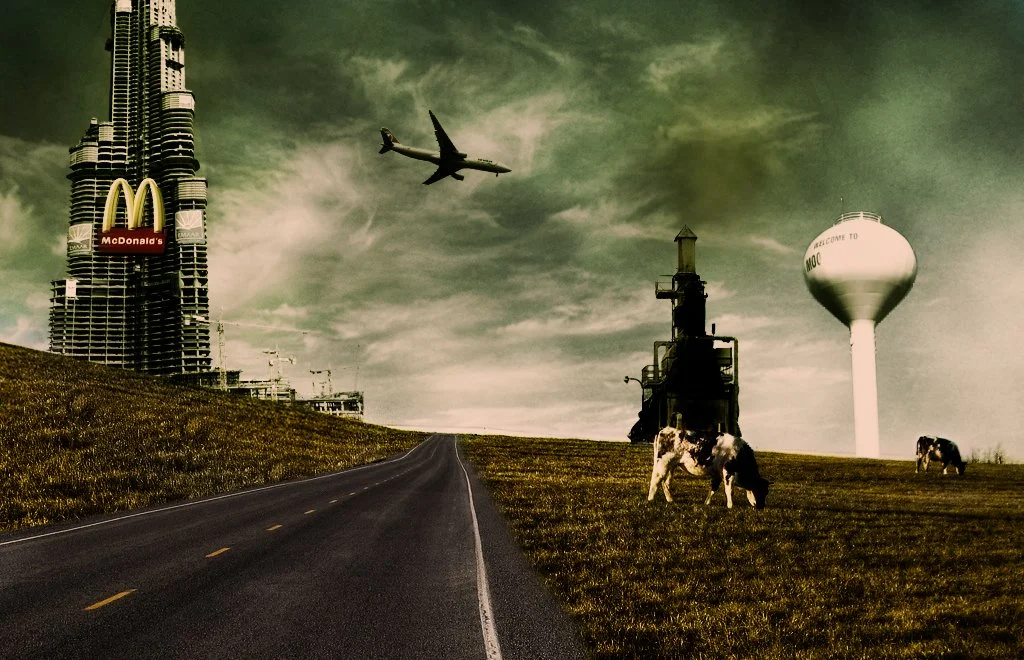
Materialism and Minimalism Part 1
It seems that capitalism has enabled humankind to replace the struggle for survival with infinite possibilities to pursuit happiness and fulfillment.
However, when you move your perspective from the greater picture to the level of the individual, there seems to be something right about the popular quote:
"The things you own end up owning you"
Today we live in a historically unmatched world of affluence and material prosperity (in western societies at least). Until just a few centuries ago, hunger and the daily struggle for survival were the order for the day for most humans on this planet and even my grandparents nearly died of starvation during the Second World War.
Today this chapter seems over and huge supermarkets supply everyone with an offer of delicacies that ancient kings could only have dreamed of. We can afford to provide everyone with social security and excellent health care and take care of old and handicapped people. Most people can own a modern car, a huge flat screen TV and a decent house. Long-distance flights to other continents are nowadays even affordable for students and spending the holidays in a foreign country is as normal as it can be.
It seems that capitalism has enabled humankind to replace the struggle for survival with infinite possibilities to pursuit happiness and fulfillment.
However, a move of perspective from the greater overall picture of society down to the individual, lets something seem alarmingly right about the popular quote:
„The things you own end up owning you.“
Instead of starvation there is widespread obesity. Instead of the daily struggle for survival there is emptiness and lack of purporse. People live in cities of millions and feel lonely. Young women feel ugly from the impossible comparison with anorexic top-models. Many fight with burn-out or depressions and numb themselves with drugs. And despite all the material affluence there is still an abundance of envy and greed.
What I attest, are the widespread symptoms of materialism that has taken hold of our societies.
With materialism I refer to a value system of basing ones value, status and self esteem on the amount of possessions and the general focus on outside stimulations. A desire for luxury goods, fancy cars, extravagant mansions and designer cloth. This does not relate to the consumption of basic goods and necessities but to the excessive hunger for more and more. Commodity fetishism as some like to say.
„We spend money that we do not have, on things we do not need, to impress people who do not care.“
It seems that the economic growth and all the material wealth that was brought to us by capitalism came with a price. The imperative for growth.
In our current economic system, more and more products have to be consumed, because stagnation means crash. It is not demand that is creating its supply, but reversely supply that is creating its demand in excess of any reasonable necessities. It needs a constant hunger for more to fuel the engine of our economies. Economies without the concept of enough so that people can be motivated by money into either nerve-racking or mind-deading 40+ hour jobs.
But how is it that people choose to join this rat race of senseless consumption? That our society seems so prone to materialism?
Firstly, it seems natural that a new acquisition such as a new phone or car can feel quite satisfying. Just remember your excitement about your new smartphone. However, this feeling is usually not lasting very long as people adapt and get used to changes quickly, so after a month your new iPhone isn't that interesting any more. But now returning to your old Nokia would feel like a painful loss so going back isn't an option. Further, to get the same pleasure again, an even better phone is needed. So people end up camping in front of apple stores to get this exciting feeling again, like junkies that need an increasingly higher dosis of heroin for the next kick.
Additionally, often a good part of the pleasure that people derive from a new good only comes from the status upgrade in relation to other people around. It’s only nice to own the fancy new Porsche if no one else around has one. In this case a status upgrade for A means a status loss for B. A zero-sum game.
Secondly, the powerful forces of marketing are constantly trying to convince us of the need for new products and how each and every problems solution is more consumption.
You want social approval? - buy designer clothing or a yacht!
Lonely? – you need a plastic surgery and more AXE products!
Expressing your personality? - buy a Jaguar! (or a Hummer H2 respectively)

Additionally, once this gets going, there is a self-reinforcing system of social pressure, controling compliance and branding system-dropouts as weirdos and outsiders. Just look at the social pressure at schools and how many children already feel the need for designer clothing.
But if you take into account the immense amounts of money flows and all the creative people employed in marketing departments to find the psychologically most effective way to fuck with your brain – wouldn’t it be strange if they were not successful? Just on your way to work you are usually bombarded with hundreds of ads literally everywhere competing for your attention. The coca-cola company spends about $3 billion per year on advertisement, that’s nearly $0,50 per every single human being!
And from this constant stream of materialist-propaganda people begin to forget that the values proposed are not their own. Not that this does never happen to me. At some point I got aware of having a subconscious preference for Axe products after their huge advertisement campaign for no rational reason.
Now, all this wouldn’t necessarily be such a disaster if there were not two big problems.
Firstly, there is a difference between the happiness about some new acquisition and general life satisfaction.
„Trying to be happy by accumulating possessions is like trying to satisfy hunger by taping sandwiches all over your body.“
I don’t question that buying new things and owning cool stuff brings a feeling of satisfaction. I question though, that this is the kind of happiness that makes up a good life. To explore this issue, it might be instructive to look at the regrets of old and dying people (here or here).
And looking at actual research is seems that materialism is indeed detrimental to a good and fulfilled life. It is more or less proven that a materialistic set of values has adverse effects on pretty much every single area of an individual’s life such as happiness, fulfillment, health or friendship. Further, it is opposed to healthy communities and the stronger the prevailing materialist values, the more criminality, the worse the government and the looser the ties between neighbors.
Admittedly, there is also research that for an individual a higher income usually increases happiness (mind the difference between having a high income and having a materialistic value system). However, there is other research that shows that if a whole nation moves up the income latter, overall happiness doesn't increase after a certain, relatively low level of living-standard is reached.
So if consumption and materialism do not define the path to true happiness - is it possible that all the fuzz about income, possessions and brands stops us from seeing those things that would really bring happiness into our lives?
„I wish everyone could get rich and famous and everything they ever dreamed of so they can see that’s not the answer.“
Secondly, we only have this one planet with limited capacities and a materialistic lifestyle is just not sustainable. To maintain our world economy we need 1.5 planets and if everyone lived like the average American we would even need 4!
Mind Kants Categorical Imperative - you can't want everyone else to consume like that.
Already, the greed for more and more takes its toll on the planet and the multifold problems are obvious:
- climate-change
- overfishing & extinction of species
- destruction of the rainforest and desertification
- pollution & diseases
- inequality and social conflict
So what’s the alternative?
Embrace Minimalism! (see Part 2)

The Benefits of Writing Down Your Goals
For almost three years now I maintain a document where I explicitely write down short- and long-termed personal goals plus some general facts about my current life situation. Working on that document is like zooming out and having a look at the bigger, overall picture of my life and maintaining this explicit statement of goals has enormously increased my general focus and perserverance.
For almost three years now I maintain a set of documents where I explicitely write down short- and long-termed personal goals plus some general facts about my current life situation. I call it my "life analysis". I update minor issues about once a month and start a new version approximately every three months. Working on that document is like zooming out and having a look at the bigger, overall picture of my life and maintaining this explicit statement of goals has enormously increased my general focus and perserverance.
For instance, about one year ago I saw a Groupon deal for sky diving. Even though the idea of jumping out of a flying airplane in 4000m altitude gave me the chills, there was pretty much no excuse to let this opportunity forgo as it was explicitely stated on my goal list.
Even though I feel no urge to do it again (I had nasty problems with earpressure) I feel proud that I did it. I doubt though, that I would have done it without the reminder of my list.
You might have experienced that it is easy to state some goal and then to neglect and forget it again (take for instance all the good old New Year's resolutions). Especially if there is plenty of effort involved (i.e. learning a language) or some kind of anxiety to overcome (i.e. sky diving), then there is lots of subconcious pressure to neglect that goal. However, once you explicitely write it down, you are regularly reminded of your lack of progress unless you start tackling it. Just like a to do list whose pending items are a continuing annoyance.
If you make yourself accountable, it will be easier to bring up the effort to tackle those goals that you conceived in your better, highly-motivated moments.
Additionally it gives focus. Once you start to ponder about your dreams and motivations regularly and come up with some conclusions, your perspective becomes clearer on what brings you closer to your dreams and ideals and what is just a waste of precious time. I feel there is nothing wrong with enjoying a lazy day in the park or hanging out in bars if that is what gives you meaning. But maybe you find that these activities are actually just time fillers that stop you from fulfilling your dream of getting the biggest milk-bottle collection in the world!
Lastly, I imagine that when I'm older, it will be extremely interesting to have a look back at different stages of my life through this life analysis - similar to the old-family-photo-album experience. Therefore I also recommend to attach some current pictures of yourself to the first page.
So in case this sounds like a good idea to you, below is a file that can be used as a base structure and a second one filled out with some examples as a guide how you could write it. The only cost to maintain the list is a little time once a month and the advantages seem manifold: First and foremost increased awareness, focus and motivation regarding your personal goals.
Don't expect to complete the list with your goals on the spot. Every once in a while new ideas for worthwhile goals will come up. Just make sure to note those somewhere immediately before you forget them again.